The Great Bifurcation named grid hardening and transmission as the one opportunity that survives in mature markets even after the generation build-out is finished. This is the case for why that layer is the trade, not a footnote to it.
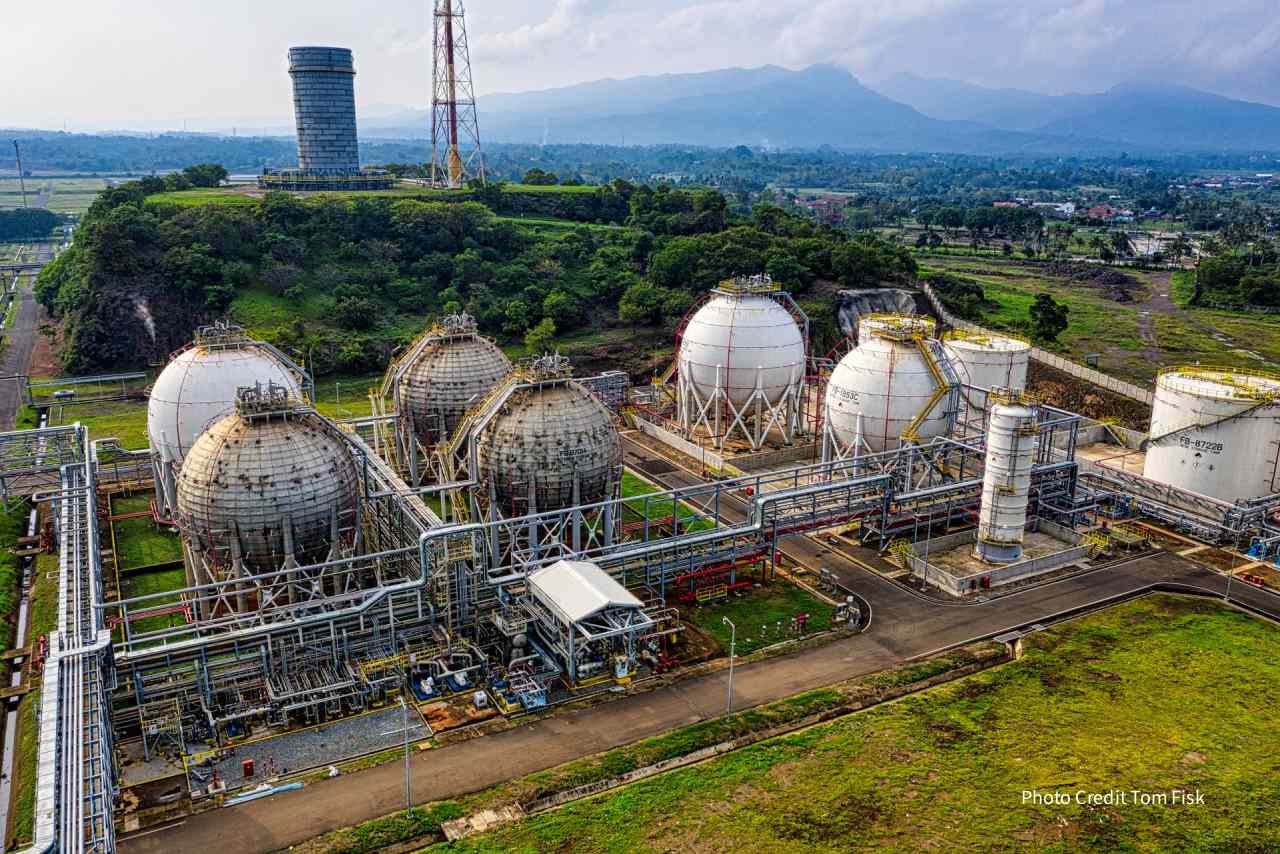
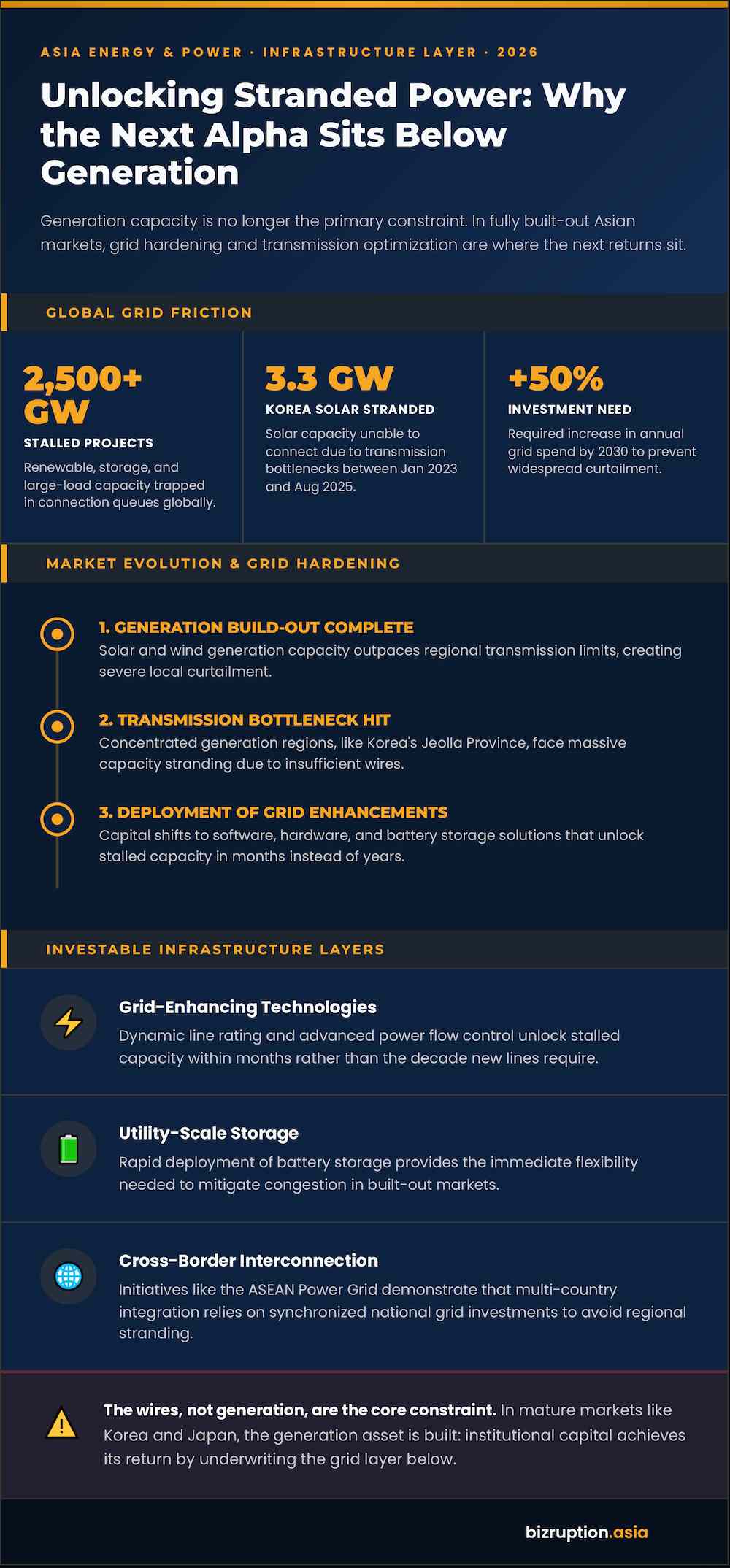
More than 2,500 gigawatts of renewable, storage and large-load projects are stalled in grid connection queues worldwide, according to the IEA’s Electricity 2026 report. Generation capacity is not the constraint. The wires to carry it are.
The Bottleneck Mature Markets Already Hit
Korea shows what this looks like once a market is fully built out on the generation side. Solar facilities unable to connect to the grid for lack of transmission capacity reached 3.3 gigawatts between January 2023 and August 2025.
Jeolla Province alone accounted for more than half of that stranded total. The region generates the bulk of Korea’s solar output and has the least spare transmission capacity to carry it. KEPCO has pledged to fix the mismatch but has not yet resolved it.
Meeting that demand will require “annual investment in grids to rise by 50% by 2030,” said Keisuke Sadamori, Director of Energy Markets and Security, IEA. He made the point at the February 2026 launch of the Electricity 2026 report. Global grid spending currently runs at roughly USD 400 billion a year.
What Is Actually Investable
The shortfall does not sit with the utilities that own the wires. It sits with the equipment, software and storage layer that lets existing grids carry more power. That layer can be upgraded in months, not the decade new transmission lines take to build.
Grid-enhancing technologies, such as dynamic line rating and advanced power flow control, can unlock stalled capacity within months rather than years, according to IEA analysis. Utility-scale battery storage deployment has grown sharply in markets facing similar congestion, providing flexibility that new transmission cannot deliver fast enough.
That is the layer institutional capital can actually underwrite at scale in a market like Korea or Japan. The generation asset is built. The constraint, and the return, now sits one layer down.
The Same Bottleneck, Growth-Market Side
Southeast Asia’s version of this problem has a name: the ASEAN Power Grid. The region’s economic ministers committed to accelerating it in a joint statement in March 2026. The mechanism depends on ten separate national grids delivering their share of generation, transmission and interconnection on a shared timeline.
A single missed commitment does not just delay one country. It strands capacity on either side of the border that has nowhere to go. That is the same failure mode Jeolla Province is living through today, at regional scale.
Mature-market Asia already shows what happens when generation outruns the grid built to carry it. Growth-market Asia is about to test whether ten governments can avoid the same mistake at once.