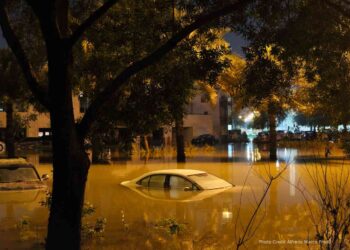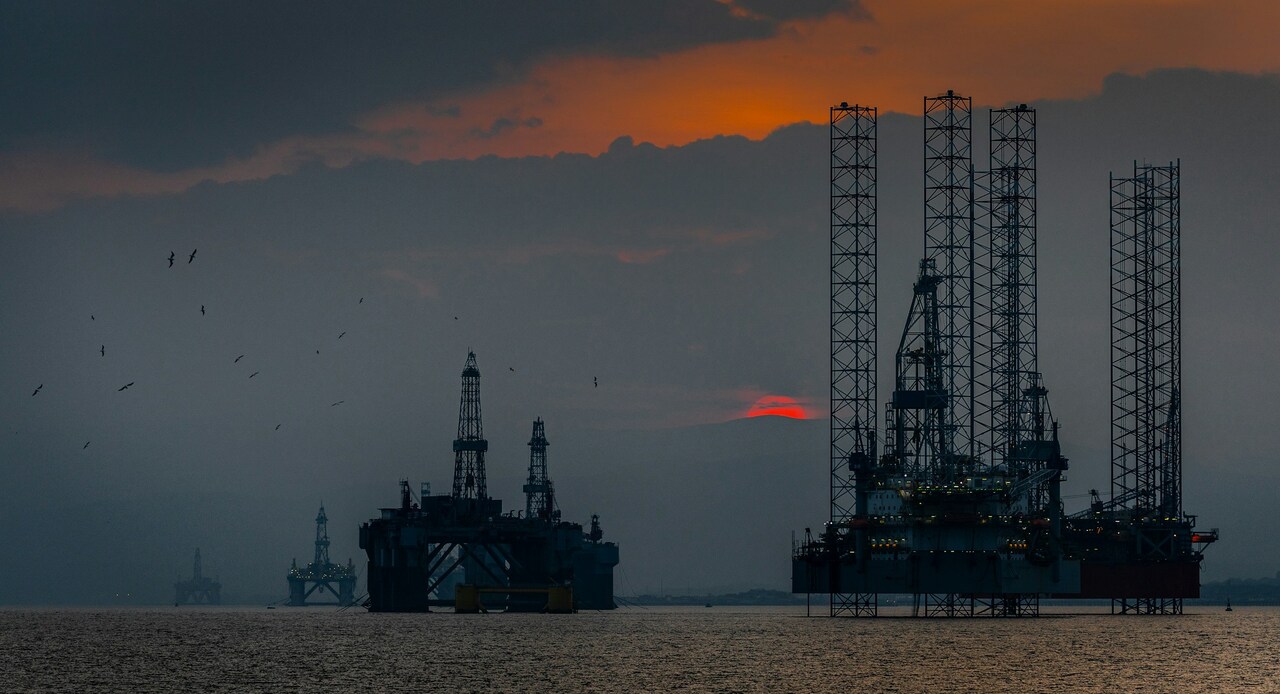
When the Strait of Hormuz began closing on 28 February 2026, ASEAN did not face a single energy crisis. It faced five – each shaped by a different mix of reserve depth, import dependency, fiscal headroom and currency resilience.
Japan’s POWERR Asia framework offers the same headline number to all of them. For the structural argument behind that framework, see the companion piece: Washington Closed the Strait. Beijing Is Calm. Tokyo Just Mobilised USD 10 Billion
Indonesia: 20 Days, a Weakening Rupiah and a 3% Ceiling
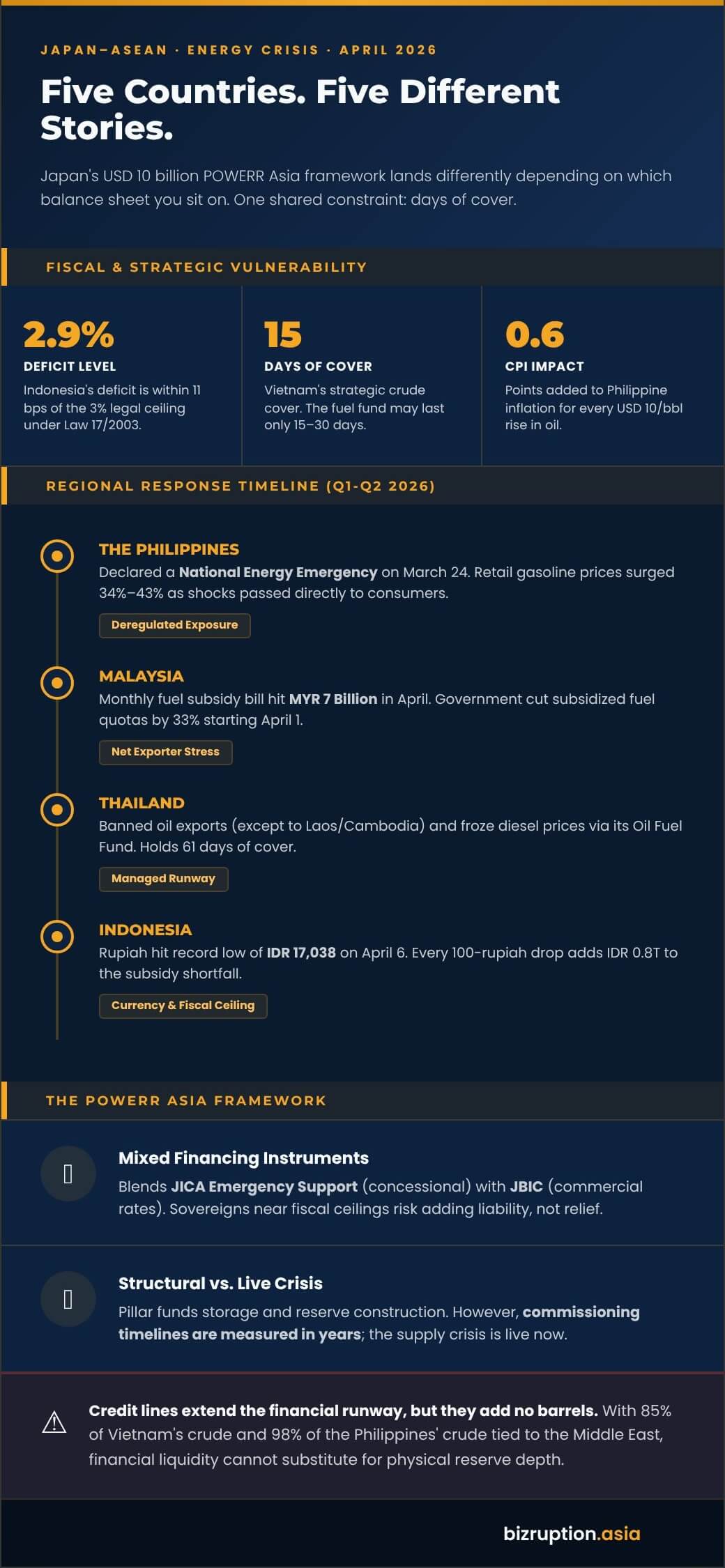
Indonesia’s 2026 energy subsidy budget – IDR 381.3 trillion – was built on USD 70 per barrel. Every USD 1 rise in oil forces an additional IDR 10.3 trillion in spending. With Brent near USD 130, that baseline no longer exists. The fiscal deficit sits at approximately 2.9% of GDP against a hard 3% legal cap in Law No. 17/2003.
The rupiah closed at IDR 17,038 per dollar on 6 April – its weakest on record – compounding the damage: oil is priced in dollars, subsidies paid in rupiah, and every 100-rupiah depreciation adds IDR 0.8 trillion to the shortfall, per INDEF. Crude cover stands at 20 days.
Finance Minister Purbaya Yudhi Sadewa has ruled out raising the legal ceiling.
Vietnam: One Supplier, 15 Days, a Fund Running Dry
Eighty-five percent of Vietnam’s crude comes from the Middle East – virtually all from Kuwait – per MUFG Research. Strategic cover runs to approximately 15 days. MUFG estimated the fuel stabilisation fund shielding consumers would last only 15 to 30 days at the prevailing burn-rate.
Every USD 10 per barrel rise cuts the current account surplus by around 0.4% of GDP. At sustained USD 120 per barrel, MUFG projects growth falling below 7% – a cut of more than one percentage point from pre-crisis consensus.
The Philippines: Deregulated, Fully Exposed
The Philippines imports 98% of its crude from the Middle East and hosts one refinery. It declared a national energy emergency on 24 March 2026, the first country globally to do so. Cover fell from approximately 55 days at crisis onset to 45 days by late March, per the Department of Energy.
The deregulated market passes price shocks directly to consumers: gasoline rose 34%-43% and diesel approximately 50% through late March, per DOE data. MUFG estimates every USD 10 per barrel increase cuts GDP growth by 0.2 percentage points and raises inflation by 0.6 percentage points.
Malaysia: Net Exporter, Fourfold Subsidy Surge
Malaysia produces oil but imported USD 12.6 billion worth, while exporting only USD 5.5 billion in the prior year, per Prime Minister Anwar Ibrahim. Finance Minister II Amir Hamzah Azizan confirmed the monthly subsidy bill had risen “from RM700 million to about RM3.2 billion” once Brent breached USD 100. By April it reached MYR 7 billion for the month.
The government cut the subsidised fuel quota from 300 to 200 litres per recipient from 1 April. At approximately 95 days of cover per Maybank Investment Bank, Malaysia holds the strongest strategic buffer among regional net importers – but the weekly repricing of its subsidy position shows that exporter status provides no automatic shield.
Thailand and Singapore: Longer Runways, Specific Gaps
Thailand holds 61 days of cover and draws 59% of petroleum imports from the Gulf – the highest concentration among ASEAN’s larger economies, per Maybank. It has banned oil exports, except to Cambodia and Laos, and frozen diesel prices via its Oil Fuel Fund.
Singapore’s more than 200 days of underground storage and IEA membership give it structural advantages the rest of the bloc lacks. Its specific vulnerability is LNG: gas powered 93% of its electricity mix in 2025 and Qatari LNG disruption has pressed directly on contracts and costs.
The Variable Credit Cannot Substitute
Five countries, five risk profiles, one shared constraint: days of cover. Credit lines extend the financial runway. They add no barrels. Japan’s POWERR Asia structural pillar funds storage construction and reserve development across the region. Its commissioning timeline is measured in years. The crisis is live now.
References:
- Oil Reserves: How Long Can Asia Last? – Khaosod English
- Asian Nations Assure Energy Supplies – Nation Thailand
- Indonesia’s Fiscal Liquidity Crunch – AInvest
- The Iran War Shows Why Indonesia Must Accelerate Its Energy Transition – Fulcrum
- Vietnam – Strait of Hormuz Closure: Oil and Energy Shortages Key for VND – MUFG Research
- Philippines – Strait of Hormuz Closure: Impact of Higher Oil Prices – MUFG Research
- DOE: 103.35 Million Liters of Government-Secured Diesel Shipment Arriving this Week, Strengthening National Fuel Security – Department of Energy
- How Much Have Fuel Prices Increased Since the Middle East War Began? – GMA Network
- Fuel Subsidies to Cost Govt MYR 3.2 Billion a Month – Free Malaysia Today
- Monthly Subsidised RON95 to Be Capped at 200 Litres from April 1 – The Edge Malaysia
- No Sudden Changes In Fuel Subsidy Policies, Decisions Will Be Guided By Data – Bernama
- ASEAN Countries Exposed by Middle East Oil Dependence – Vietnam Investment Review/Maybank IB
- Southeast Asia’s Agency Amid the New Oil Crisis – Carnegie Endowment for International Peace
- In Southeast Asia, the Scramble for Energy Is On – The Diplomat
- POWERR Asia Overview – Prime Minister’s Office of Japan