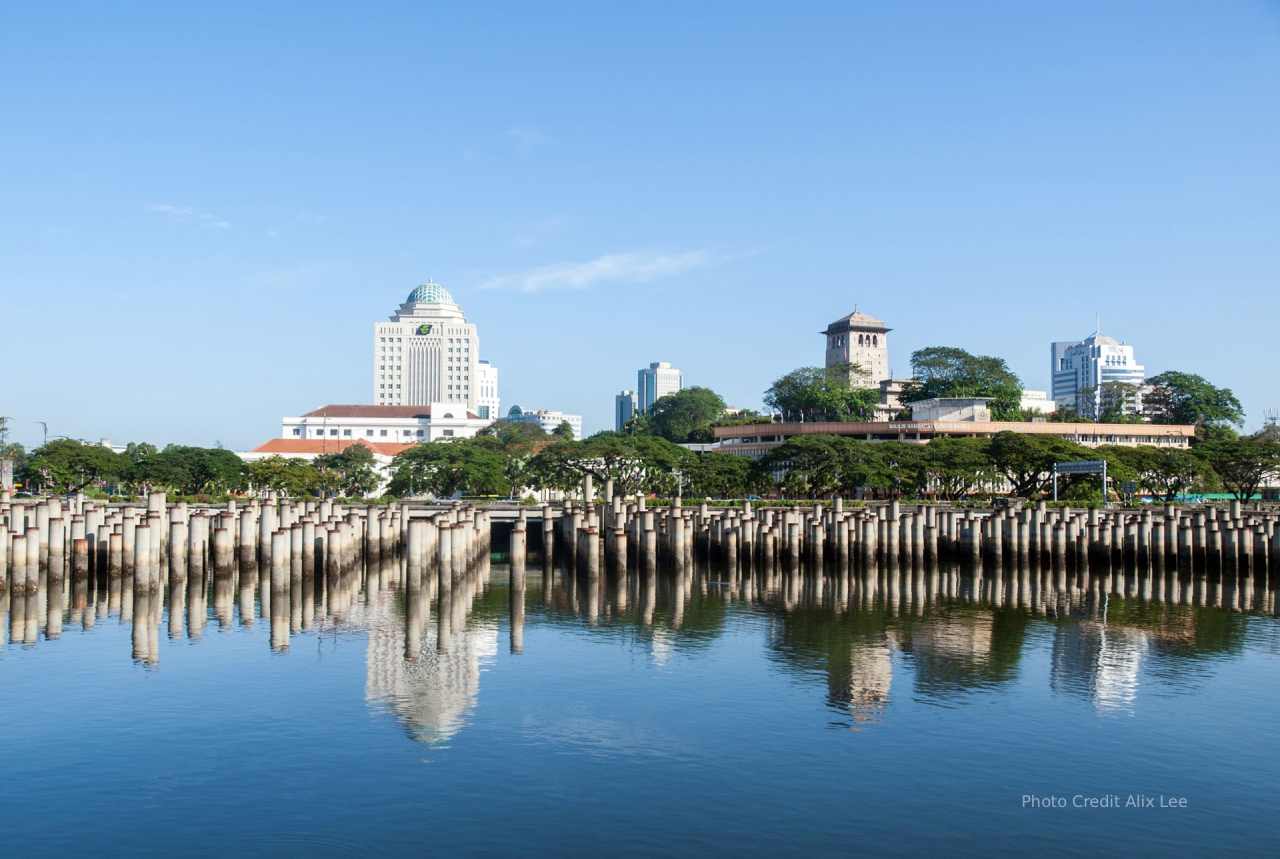
Malaysia is increasingly being treated as a major digital infrastructure destination in Southeast Asia. Data centres, cloud platforms, semiconductor-linked capacity and AI-adjacent investment have all pushed the country higher up the regional capital map.
That shift is not accidental. Malaysia offers a comparatively mature financial system, stronger institutional depth than many regional peers and a policy environment that has been able to attract long-duration, higher-specification capital. For investors looking beyond low-cost manufacturing, that matters.
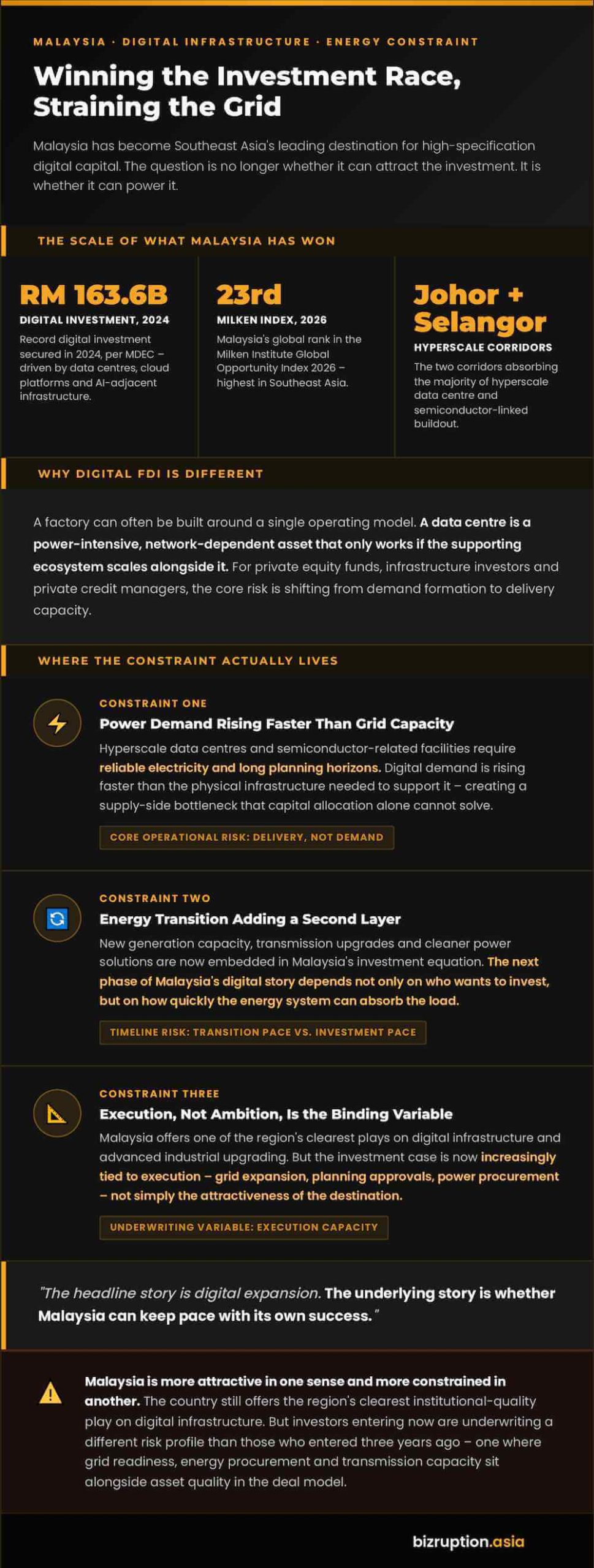
But the question is no longer whether Malaysia can attract the investment. It is whether it can power it.
The Grid Is the Real Constraint
The scale of digital buildout in Johor and Selangor is now creating a different kind of investment conversation. Hyperscale data centres, semiconductor-related facilities and cloud infrastructure require not just land and capital, but reliable electricity, grid expansion and long planning horizons. The risk is that digital demand is rising faster than the physical infrastructure needed to support it.
That gap matters because digital FDI behaves differently from traditional manufacturing FDI. A factory can often be built around a single operating model. A data centre, by contrast, is a power-intensive, network-dependent asset that only works if the supporting ecosystem scales alongside it. For private equity funds, infrastructure investors and private credit managers, the core risk is shifting from demand formation to delivery capacity.
The Investment Case Is Shifting
Malaysia’s energy transition adds another layer to the story. New generation capacity, transmission upgrades and cleaner power solutions are now part of the country’s investment equation. In practice, that means the next phase of Malaysia’s digital story will depend not only on who wants to invest, but on how quickly the energy system can absorb the load.
That is why the most important question is no longer whether Malaysia can win more digital capital. It already is. The real question is whether the country can convert that capital into durable productive capacity without running into a supply-side bottleneck.
For investors, that makes Malaysia more attractive in one sense and more constrained in another. The country still offers one of the region’s clearest plays on digital infrastructure and advanced industrial upgrading. But the investment case is now increasingly tied to execution, not just ambition.
The headline story is digital expansion. The underlying story is whether Malaysia can keep pace with its own success.
References:
- Milken Institute – Global Opportunity Index 2026: Growth Markets in Southeast Asia
- Malaysia Ministry of Investment, Trade and Industry – Malaysia retains top spot in emerging Southeast Asia / GOI 2026 release
- Malaysia Department of Statistics – Statistics of Foreign Direct Investment (FDI) in Malaysia 2024
- MDEC – Malaysia’s digital investments hit record RM163.6 billion in 2024
- Bernama – The Rise of Data Centres: Can Malaysia’s Power Grid Cope?