Something shifted in institutional portfolios during 2025 that most market commentary missed. Whilst headlines focused on interest rate cycles and repricing volatility, Asia Pacific investment volumes reached US$106.6 billion year-to-date through Q3, an 11% increase year-on-year—whilst cross-border capital flows surged 88% to US$27.3 billion over the same period.
The timing matters: institutional capital doesn’t accelerate this dramatically without fundamental conviction that expected returns in traditional markets have deteriorated whilst opportunities elsewhere have repriced attractively.
For Southeast Asian economies – Singapore, Malaysia, Thailand, Vietnam, Philippines, Indonesia – the implications cascade beyond property markets into economic development trajectories and competitive positioning within broader APAC capital flows.
Why Capital Is Moving Now
Understanding the acceleration requires examining what institutional investors are repositioning away from. CBRE upgraded its 2025 full-year APAC investment forecast to 10-15% growth, citing solid demand in Korea, Japan and Singapore alongside widening positive yield spreads – the kind of fundamentals that attract capital seeking stability.
The contrast with developed markets sharpens the appeal. US office vacancy rates remain elevated whilst European markets face structural challenges from hybrid work adoption. Meanwhile, APAC markets offer demographic growth and urbanisation tailwinds that mature Western economies lack, creating the conditions for sustained rental income rather than just repricing gains.
The shift reflects structural repositioning rather than cyclical opportunism. Aberdeen Investments noted that US and European institutional investors remain generally under-allocated to APAC commercial real estate, with motivation to diversify into the region expected to increase, especially toward core markets such as Japan, Australia and South Korea.
Southeast Asia’s Complex Position
For Southeast Asian markets, the capital reallocation presents both opportunity and challenge. The region benefits from APAC’s rising profile whilst competing for capital against more established markets.
Buyer sentiment is strengthening across the region. CBRE’s 2025 Asia Pacific Investor Intentions Survey showed positive net buying intentions reaching 13% – a meaningful shift from 5% twelve months earlier – with participants pointing to falling borrowing costs and better asset pricing as catalysts for deployment.
But the capital flows reveal clear hierarchy. Singapore commands premium valuations reflecting its gateway status, whilst Vietnam, Indonesia and Philippines attract capital seeking higher returns in less mature markets.
The differentiation matters. Singapore benefits from rapidly expanding family office presence -creating domestic capital pools that complement foreign institutional flows. Meanwhile, emerging Southeast Asian markets compete for capital deployment against India’s massive institutional appetite and Australia’s repriced valuations.
Southeast Asia’s GDP grew 4.6% in 2024, surpassing previous projections, with Vietnam, Malaysia and Philippines exceeding initial forecasts. But economic growth doesn’t automatically translate to proportional capital allocation when institutional investors maintain strict criteria around market depth, regulatory transparency and exit liquidity.
The Sectors Attracting Deployment
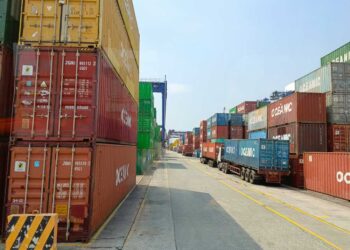
Capital allocation patterns reveal investor priorities. Logistics and industrial assets lead regional recovery, driven by e-commerce growth and supply chain diversification strategies as companies reduce manufacturing concentration risks.
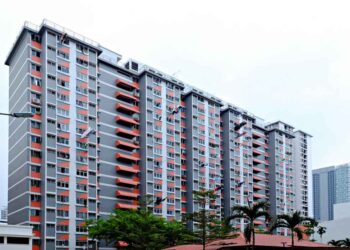
The living sector – multifamily residential and build-to-rent – attracts significant institutional interest, particularly in Japan, Australia and South Korea. APAC core real estate funds shifted more capital toward residential assets over the past five years, raising allocations from 11% to 16% of portfolios as demographics and urbanisation patterns evolved.
Data centres represent another focal point. JLL projects data centre investment will reach US$15 billion in APAC by 2026, driven by AI infrastructure requirements and digital transformation across economies.
For Southeast Asia specifically, the challenge lies in scaling institutional-grade supply to meet capital demand. Indonesia leads the ASEAN office market with 47.9% of 2024 revenue, whilst Vietnam’s Ho Chi Minh City compressed vacancy rates to 19.4%, illustrating how corporate demand for quality space outpaces supply in key growth markets.
The Family Office Factor
Family offices are quietly reshaping regional real estate dynamics in ways traditional metrics don’t capture.
Institutional pension funds face quarterly return scrutiny and strict governance frameworks.
→ Longer hold periods
→ Flexibility for direct investments institutions can’t access
Family office capital represents untapped opportunity
The Forward Calculus
Accelerating APAC capital deployment creates both momentum and vulnerability. When capital floods into any region at this velocity, pricing dynamics shift rapidly. Cushman & Wakefield’s Fair Value Index surged to 62.5 in Q3 2025 from 22.7 two years prior, indicating 46% of markets are now underpriced compared to 18% previously – but those valuations reflect pre-surge assessments.
Real estate investment sales in Southeast Asia increased 16% year-on-year through recent periods, but questions emerge about sustainability. Are institutional investors reweighting portfolios toward long-term structural growth, or are they late-cycle capital chasing diminishing opportunities?
The answer likely varies by market. Singapore and Malaysia benefit from the Johor-Singapore Special Economic Zone, targeting 100,000 jobs and US$26 billion annual GDP impact – the kind of structural catalyst that justifies sustained capital deployment.
Asset class preferences are also evolving. In Colliers’ 2026 Global Investor Outlook, Lachlan MacGillivray, the firm’s Managing Director of Retail Capital Markets for Asia Pacific, observed retail’s status shift: “Retail, long considered a premier asset class, then viewed as an alternative, has now swung back to premier status.”
The comment reflects a broader recalibration – when alternatives like co-living or flex office disappoint, capital returns to proven asset classes with stable cash flows.
The Risk Nobody’s Stress-Testing
The uncomfortable question institutional investors should be asking: if substantially more capital is chasing APAC opportunities, has the opportunity set actually expanded proportionally, or are more investors bidding for the same core assets?
APAC investment volumes of US$39.5 billion in Q3 2025 marked a 26% quarterly increase, but transaction velocity hasn’t matched capital raising velocity. The gap suggests either:
- dry powder accumulating whilst investors wait for better entry points, or
- insufficient institutional-grade product to absorb capital deployment at current pricing expectations.
For Southeast Asian markets, the implications cut both ways. Limited supply of Grade A office towers in Bangkok or Kuala Lumpur could drive pricing beyond fundamental valuations. Alternatively, the supply constraint could throttle capital deployment, pushing institutional investors toward India, Japan or Australia where market depth accommodates larger ticket sizes.
The capital composition is also shifting. PwC’s Family Office Deals Study shows family offices increased real estate allocations to 39% of portfolios in H1 2025, the highest share since H2 2019. Unlike institutional pension funds bound by quarterly performance targets and strict governance mandates, family offices deploy patient capital with flexibility for longer hold periods and direct investments. This creates liquidity in market segments that institutional allocators, constrained by minimum US$50-US$100 million ticket sizes, cannot efficiently access.
What This Means for The Future
The sharp acceleration in APAC capital deployment represents either extraordinary foresight or late-cycle exuberance. The answer won’t be clear until we see whether institutional investors arriving now secure attractive returns or discover they’ve bought near cycle peaks.
What’s certain: Southeast Asian economies benefit from heightened attention but must compete aggressively to convert interest into actual capital deployment. That requires accelerating institutional-grade supply, maintaining regulatory transparency and ensuring exit liquidity that gives large allocators confidence they can reposition if fundamentals deteriorate.
The question for portfolio managers isn’t whether Asia Pacific deserves higher allocations – that debate concluded in early 2025 when capital commitments accelerated. The question is whether the institutions deploying now are early movers capturing structural shifts, or late arrivals bidding up assets that have already repriced to reflect changed expectations.
For Southeast Asia specifically, the opportunity window remains open but narrowing. Capital is moving decisively toward the region. Whether that capital finds sufficient opportunities at acceptable valuations will determine whether 2025’s acceleration marks the beginning of sustained reallocation or the peak of a short-lived enthusiasm.