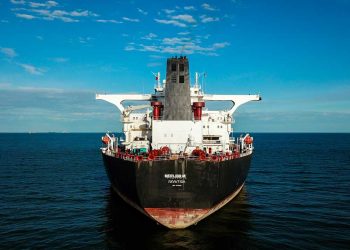
The system that underpins global shipping did not freeze because of a military blockade. It froze because the insurance market withdrew. Within 72 hours of US–Israeli strikes on Iran on 28 February 2026, the world’s largest marine insurance mutuals – Gard, Skuld, NorthStandard, the London P&I Club, Steamship Mutual and the American Club – issued war risk cancellation notices for all vessels entering the Persian Gulf, the Strait of Hormuz and the Gulf of Oman.
Cancellations took effect at midnight GMT on 5 March. The International Group of P&I Clubs, covering approximately 90% of the world’s ocean-going tonnage, had collectively withdrawn from a zone carrying roughly 20% of the world’s daily oil supply. Lloyd’s List clarified the mechanism: this was not wholesale cancellation of all cover, but specifically the war risk extensions charterers and cargo owners received as standard.
What replaced them was voyage-by-voyage reinstatement at materially higher premiums that most operators declined to absorb.
Pass-Through Asymmetry
How the oil shock reaches your cost base — and through which channel
The variable that matters is not the oil price. It is which channel carries the shock to your cost base first — and how quickly.
What the Repricing Looks Like in Practice
The cost movement is quantifiable. Before the strikes, war risk premiums stood at approximately 0.25% of a vessel’s insured hull and machinery value, according to Marsh, according to Marsh, cited by S&P Global Market Intelligence. Premiums have since reached 0.5% or higher – a doubling within days that passes directly to cargo owners as surcharges.
This was not wholesale cancellation of all cover, but specifically the war risk extensions charterers and cargo owners received as standard.
The named carriers moved within 48 hours. Hapag-Lloyd announced a War Risk Surcharge of US$1,500 per TEU, CMA CGM an Emergency Conflict Surcharge of US$2,000 per 20-foot dry container, and Maersk an emergency freight increase across all Gulf ports under Clause 20 of its bill of lading – the contractual provision permitting unilateral rate modification – per primary carrier advisories published 2 March.
Peter Sand, chief analyst at Xeneta, told Lloyd’s List the strikes would see “the further weaponisation of trade and shatter hopes of a large-scale return of container shipping to the Red Sea in 2026” – confirming both chokepoints are now simultaneously closed, a dual-corridor disruption with no modern precedent.
The ASEAN Treasury Risk That Is Not in the Oil Price
For ASEAN CFOs and treasury functions, the war risk repricing creates three direct exposures the Brent crude price does not capture: freight cost pass-through on open contracts; working capital pressure from 10–14 additional transit days via the Cape of Good Hope; and force majeure trigger risk from Maersk’s Clause 20 invocation.
For manufacturers with back-to-back supply and offtake contracts, the asymmetry is immediate: freight costs have increased unilaterally while customer pricing may carry no equivalent pass-through clause.
For manufacturers with back-to-back supply and offtake contracts, the asymmetry is immediate: freight costs have increased unilaterally while customer pricing may carry no equivalent pass-through clause. The insurance withdrawal is not a temporary disruption. The Joint War Committee of Lloyd’s Market Association updated its high-risk area listings in early 2026, a reinsurance pricing designation independent of daily military developments.
Treasury functions modelling freight normalisation on a six-week horizon are working from an assumption the reinsurance market is not supporting. Those who have stress-tested working capital against a 90-day rerouting scenario, amended LC terms on Gulf-origin cargo and reviewed force majeure clauses in active trade contracts are ahead of a cycle that is no longer optional.
References:
- Major Insurance Clubs to End Ship War-Risk Cover in Persian Gulf – Bloomberg
- Iran Attacks Prompt Red Sea Rethink as Box Shipping Exits Strait of Hormuz – Lloyd’s List
- Oil Supertanker Rates Hit All-Time High as Insurers Drop War Risk – CNBC
- No, P&I Clubs Have Not Cancelled War Risk Cover – Lloyd’s List
- Marine War Insurance for Hormuz Dries Up – S&P Global Market Intelligence
- Strait of Hormuz Escalation Rattles Global Shipping with War Levies and Insurance Cover Cuts – The National
- Strait of Hormuz Emergency Freight Increase – Maersk Primary Advisory
- Middle East Operational Update 8 – Maersk
- Strait of Hormuz Transits Collapse as Shipping’s Risk Appetite Is Tested – Lloyd’s List Intelligence
- LNG Tankers Divert from Strait of Hormuz as War Risk Insurance Is Axed – Daily News Egypt / Bloomberg