
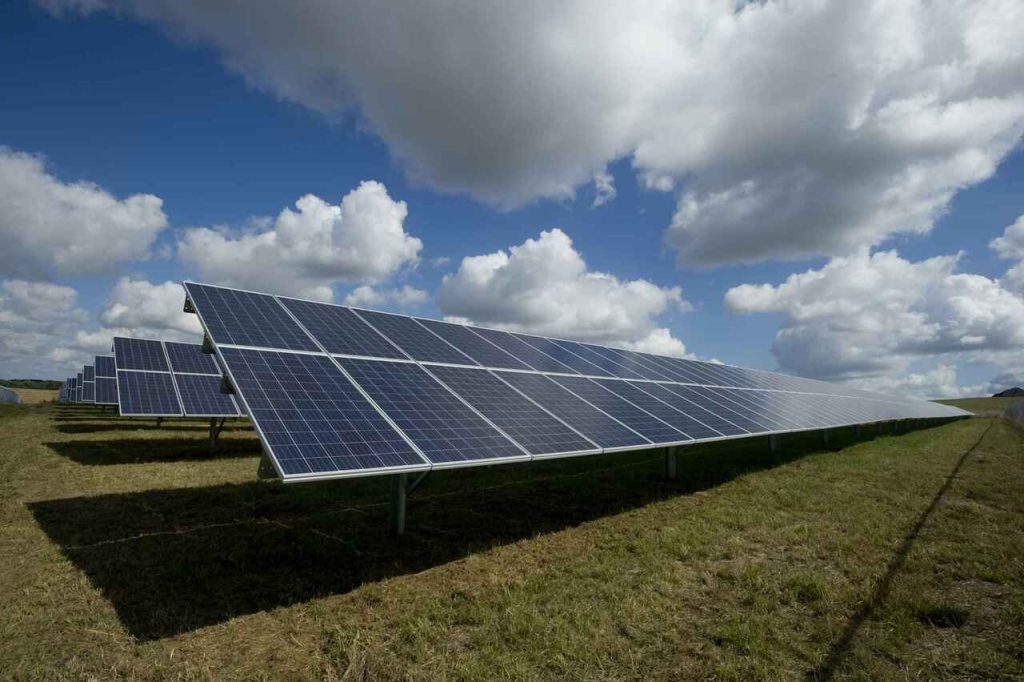
When TotalEnergies committed $4 billion to Vietnam’s offshore wind programme and Shell announced partnerships across Thailand’s solar corridors, they weren’t following ESG mandates. They were recalculating the levelised cost of energy against tariff structures, grid integration risks and sovereign guarantees. The arithmetic has fundamentally shifted.
The International Energy Agency’s Southeast Asia Energy Outlook indicates the region requires at least $200 billion in clean energy investment by 2030 to align with Paris Agreement trajectories. Yet the decision matrix facing institutional investors, project developers and equipment manufacturers evaluating Indonesia, Vietnam, Thailand, Malaysia and the Philippines isn’t about chasing renewable targets. It’s about engineering bankable projects that survive both regulatory flux and offtaker credit risk.
DFI / Patient Capital
Key Advantages: Lower execution risk, creditworthy offtakers, grid integration support from host governments. Thailand and Malaysia offer regulatory predictability, Vietnam provides JETP-backed financing frameworks.
Risk Mitigators: IFC/JBIC/KfW co-financing, political risk insurance, local currency hedging available. TNB’s $10.2B grid modernisation (Malaysia) and Thailand’s EPPO frameworks eliminate major bottlenecks.
The Economics of Southeast Asian Renewables
ASEAN’s renewable ambitions aren’t speculative. They’re driven by economics and energy security. Regional electricity demand is projected to grow 41% by 2030, according to Ember’s clean energy analysis, whilst domestic fossil fuel reserves decline and import dependency creates balance-of-payments pressure. Solar’s levelised cost has fallen 55-81% across the region since 2012, making it cheaper than imported coal in Malaysia and competitive with gas in Thailand.
Project finance for ASEAN renewables has improved markedly, with better power purchase agreement (PPA) frameworks and grid integration reducing investor risk. Yet between 2021 and 2023, the region attracted only $45 billion in cumulative investment; far short of what’s required, according to analysis by Standard Chartered.
Country-by-Country Analysis: Five Distinct Propositions
Indonesia: Market Scale with Execution Challenges
Indonesia’s RUPTL 2025-2034 targets 42.6 GW of new renewable capacity by 2034, with solar accounting for 17.1 GW, followed by hydro (11.7 GW), wind (7.2 GW) and geothermal (5.2 GW). The Just Energy Transition Partnership (JETP) aims to mobilise $20 billion in international finance for clean energy transition.
Yet execution remains uneven. Renewable energy investment reached only $565 million in the first half of 2024 – less than a quarter of the $2.4 billion directed to mineral and coal sectors, according to the Centre for Research on Energy and Clean Air. State utility PLN’s reluctance to implement earlier targets, combined with regulatory fragmentation between central and provincial governments, creates permitting bottlenecks.
For developers, Indonesia offers domestic market access – 280 million consumers – but demands patient capital willing to navigate bureaucratic complexity and PLN’s preferential treatment of fossil-fuel capacity. Manufacturing wages average 3.27 million IDR monthly (approximately $200), making operations cost-competitive, but offtaker risk remains elevated.
Private Equity / Strategic Investors
Key Advantages: Higher returns, first-mover advantage in underserved markets, corporate offtakers with strong balance sheets. Philippines’ GEAP/GEOP programmes and Indonesia’s provincial renewable mandates create immediate demand.
Risk Mitigators: Creditworthy industrial offtakers (data centres, manufacturing facilities, mining operations), early grid connection approvals, land banking strategies. Focus on provinces prioritising coal-to-renewable transition.
Vietnam: Ambition Meets Grid Constraints
Vietnam’s revised Power Development Plan VIII sets aggressive targets: onshore and nearshore wind capacity of 26-38 GW by 2030, offshore wind at 17 GW, and battery storage jumping to 10-16.3 GW from a previously planned 300 MW. The plan requires $135 billion in investment through 2030.
The challenge is grid absorption. Vietnam’s renewable boom – solar capacity surged from near-zero in 2017 to 22.9 GW in 2020 under generous feed-in tariffs – overwhelmed transmission infrastructure, causing curtailment issues. The government’s response: prioritising grid modernisation and battery storage to integrate variable renewable energy safely.
For project developers, Vietnam’s $15.5 billion JETP provides financing frameworks, whilst direct power purchase agreements (DPPAs) allow corporate offtakers to contract directly with generators. Manufacturing wages average 7.7-8.4 million VND monthly ($294-$321), and industrial power demand from electronics and textile sectors creates genuine offtake demand beyond government PPAs.
Thailand: Mature Market with Regulatory Clarity
Thailand’s draft revised Power Development Plan 2024 targets 51% renewable electricity by 2037, with approximately 50 GW of new renewable capacity and 14 GW of energy storage. Solar will dominate – 39 GW of ground-mounted and floating installations – complemented by 9 GW wind, 5.5 GW biomass and 3 GW hydro.
Thailand’s advantage is predictability. The Energy Policy and Planning Office (EPPO) provides clear auction mechanisms, feed-in tariffs and direct PPA frameworks. The Asian Development Bank’s $820 million loan package for solar-plus-storage projects demonstrates international confidence in Thailand’s regulatory stability.
Grid infrastructure is advanced – the Map Ta Phut LNG terminal handles 11.5 million tonnes annually – and manufacturing capacity for PV cells sits at 10 GW annually with $4.3 billion export value. Manufacturing wages average 14,530 baht monthly (approximately $424), reflecting a quality premium, but operational reliability and established supplier ecosystems justify the cost.
Equipment / EPC Contractors
Key Strategy: Establish regional assembly facilities and service centres in Malaysia (52 GW solar PV capacity) and Thailand (10 GW capacity). Localisation requirements tightening across all markets. Malaysia’s manufacturing base offers supply chain hub advantages.
Opportunity: Long-term service contracts (O&M) offer higher margins and recurring revenue beyond equipment sales. Vestas, Siemens Gamesa, Longi and JinkoSolar already establishing regional presence. Proximity to projects reduces logistics costs.
Malaysia: Infrastructure Excellence with Corporate PPA Momentum
Malaysia’s National Energy Transition Roadmap (NETR) targets 35% renewable electricity by 2030 and 40% by 2035, requiring approximately 32 GW of new renewable capacity and $47 billion in investment through 2030. The government’s 13th Malaysia Plan (13MP) allocates $100 billion for overall energy transition, demonstrating binding commitment rather than aspirational targets.
Malaysia’s competitive advantage is infrastructure maturity. Ranked second overall in Dezan Shira & Associates’ 2026 Asia Manufacturing Index, Malaysia combines world-class ports (Port Klang, Tanjung Pelepas) with advanced grid reliability. State utility TNB’s $10.2 billion grid modernisation programme – 64% earmarked for inter-regional circuits and system operator tools – addresses the primary bottleneck constraining VRE integration.
The corporate PPA market is accelerating. Data centres, semiconductor fabs and multinationals are contracting 15-25 year renewable PPAs under the Corporate Green Energy Supply Program (CRESS), creating creditworthy offtake independent of utility contracts. ACWA Power’s $10 billion commitment and Chinese energy firms’ $2.82 billion Sarawak investments signal sustained foreign appetite.
Manufacturing wages average 3,492 MYR monthly (approximately $760) – higher than regional peers but justified by operational reliability, established supplier networks and a 52 GW solar PV manufacturing capacity that positions Malaysia as ASEAN’s equipment hub. For developers prioritising execution certainty over labour arbitrage, Malaysia offers Thailand-level predictability with stronger manufacturing integration.
Philippines: Corporate PPA Momentum with Infrastructure Gaps
The Philippine Department of Energy’s National Renewable Energy Program targets 35% renewable generation by 2030 and 50% by 2040. Between 2025 and 2030, $26.2 billion is expected in power sector investment, with solar PV accounting for 38.8%, onshore wind 19.4%, and offshore wind 17%.
The Green Energy Auction Program (GEAP) and Green Energy Option Program (GEOP) facilitate corporate PPAs, allowing businesses to contract directly with renewable generators, a critical enabler for creditworthy offtakers. Masdar’s $15 billion commitment for solar, wind and battery storage projects targeting 1 GW by 2030 signals international appetite.
However, transmission bottlenecks persist outside Metro Manila, and the “Build Better More” programme’s $26 billion infrastructure allocation (over 5% of GDP) addresses decades of underinvestment. Factory wages average PHP 19,500 monthly (approximately $342), competitive for operations, whilst English proficiency and technical skills suit equipment manufacturing and project management roles.
Decision Framework: Matching Strategy to Risk Appetite
The choice isn’t binary between markets. Leading developers now operate multi-country portfolios, hedging regulatory risk across jurisdictions whilst leveraging technology platforms.
For Development Finance Institutions and Patient Capital (7-10 Year Horizon)
Thailand, Malaysia and Vietnam offer the clearest paths to bankable utility-scale projects. Thailand’s regulatory maturity and Malaysia’s infrastructure excellence support gigawatt-scale solar and wind farms with predictable timelines. Malaysia’s TNB grid modernisation and Thailand’s EPPO frameworks eliminate major execution bottlenecks. Vietnam’s grid modernisation plans and JETP financing create opportunities in transmission infrastructure and battery storage, essential enablers for the renewable build-out.
These markets reward long-term commitment with lower execution risk. Expect competitive auction pricing but manageable permitting processes and creditworthy offtakers. IFC, JBIC, KfW and ADB are actively co-financing projects, providing political risk insurance and local currency hedging.
For Private Equity and Strategic Investors (3-5 Year Horizon)
The Philippines and Indonesia present higher-risk, higher-return opportunities. The Philippines’ corporate PPA market – driven by Renewable Portfolio Standards requiring utilities to source 2.52% annually from renewables – creates immediate demand. Industrial and commercial consumers with strong balance sheets (data centres, manufacturing facilities, mining operations) seek long-term contracts to hedge against grid volatility.
Indonesia’s scale is compelling for developers willing to navigate bureaucracy. Provincial governments in East and South Kalimantan are prioritising renewable projects to diversify coal-dependent economies. Early movers securing land rights and grid connection approvals will command structural advantages as competition intensifies.
For Equipment Manufacturers and EPC Contractors:
All five markets offer deployment opportunities, but timing differs. Vietnam, Thailand and Malaysia are executing now – solar installations, wind turbine procurement, and battery storage systems represent immediate revenue. Malaysia’s 52 GW solar PV manufacturing capacity creates opportunities for localisation partnerships and service contract integration. Indonesia and the Philippines are 18-24 months behind on large-scale deployment but front-loading equipment supply chains.
Vestas, Siemens Gamesa, Longi and JinkoSolar are establishing regional assembly facilities and service centres, recognising that localisation requirements will tighten. Proximity to projects reduces logistics costs and positions manufacturers for long-term service contracts; increasingly, the higher-margin business.
The Execution Window
Early movers securing grid approvals, assembly capacity, and offtaker relationships command structural advantages.
Looking Forward: The 2026-2028 Execution Window
ASEAN’s renewable trajectory is underpinned by converging fundamentals that create genuine opportunity rather than speculative positioning.
First, technology economics have crossed the threshold. Solar and wind are now the cheapest new sources of electricity across the region, and battery storage costs are declining 15%-20% annually. This isn’t subsidy-dependent development. It’s economically rational grid expansion.
Second, grid infrastructure is improving. The ASEAN Power Grid Financing Initiative – backed by $10 billion from ADB and $2.5 billion from the World Bank – is funding transmission upgrades and cross-border interconnections. Vietnam’s Long Thành Airport (opening 2026) and Malaysia’s semiconductor corridor expansions will drive industrial electricity demand, justifying grid investments.
Third, corporate procurement is accelerating. Multinational manufacturers – particularly in electronics, automotive and data centres – face Scope 2 emission targets that require renewable electricity. Direct PPAs are now standard practice, creating creditworthy offtake independent of utility contracts.
Most importantly, DFI mobilisation is materialising. The JETPs for Indonesia ($20 billion) and Vietnam ($15.5 billion) aren’t pledges. They’re deployment vehicles with Comprehensive Investment and Policy Plans specifying project pipelines, regulatory reforms and financing structures.
The window for advantageous positioning is now. Developers securing grid connection approvals, equipment manufacturers establishing local assembly capacity, and investors building relationships with creditworthy offtakers will command structural advantages as policy clarity improves and competition for prime sites intensifies.
The question isn’t whether ASEAN reaches 100 GW of new renewable capacity by 2030. It’s whether your organisation has engineered the project finance structures, regulatory relationships and technical capabilities to capture its proportionate share of the $200 billion deployment.
References:
- International Energy Agency, “ASEAN Renewables: Investment Opportunities and Challenges,” 2024
- World Economic Forum, “Achieving a just and responsible energy transition in ASEAN,” January 2024
- Ember, “ASEAN’s clean power pathways: 2024 insights,” June 2025
- Zero Carbon Analytics, “The race to invest in Southeast Asia’s green economy,” May 2025
- ASEAN Centre for Energy, “ASEAN Energy Investment 2024,” October 2024
- Standard Chartered via Bloomberg, “Financing ASEAN’s Energy Future: Unlocking Green Growth,” March 2025
- Ashurst, “Indonesia’s new power development plan: Highlights from the 2025–2034 RUPTL,” 2025
- Centre for Research on Energy and Clean Air, “Indonesia’s RUPTL 2025-2034: Fossils first, renewables later,” September 2025
- U.S. Commercial Service, “Vietnam Revised Power Development Plan VIII,” April 2025
- Watson Farley & Williams, “Vietnam makes major updates to Power Development Plan VIII,” April 2025
- KPMG Vietnam, “Revised Power Development Plan VIII of Vietnam under Decision 768,” July 2025
- Ember, “Thailand’s 2037 power sector targets,” October 2025
- Energy Tracker Asia, “Solar Energy in Thailand: Policy Aspiration to Economic Engine,” May 2025
- U.S. Commercial Service, “Thailand – Energy,” 2024
- Mordor Intelligence, “Malaysia Renewable Energy Market,” October 2025
- Ember, “Solar and grid flexibility critical for Malaysia,” August 2025
- IRENA, “Socio-Economic Impacts of the Energy Transition Malaysia,” December 2025
- Energy Tracker Asia, “Malaysia Nears Its 40% Renewable Energy Target by 2035,” August 2024
- Power Technology, “Philippines aims to attain 35% renewable energy generation by 2030,” July 2025
- GlobalData, “Philippines’ annual renewable power generation to reach 69.4TWh in 2035,” June 2025
- Chambers and Partners, “Renewable Energy 2025 – Philippines,” 2025
- Department of Energy Philippines, “PH push for renewable energy yields record-breaking installations,” 2024
- World Bank, “ASEAN Power Grid Financing (APGF) Initiative,” October 2025
- Trading Economics, “Indonesia Average Monthly Wages in Manufacturing,” 2025
- Trading Economics, “Malaysia Average Monthly Wages in Manufacturing,” 2025