Taiwan investors frustrated by Malaysia’s visa bureaucracy, Singapore Airlines defends Air India losses citing India’s market potential, Indonesia confronts $572 billion debt wall, Canada joins Luzon Corridor as Philippines expands infrastructure partnerships, and Thailand’s actual investment surges 18%.
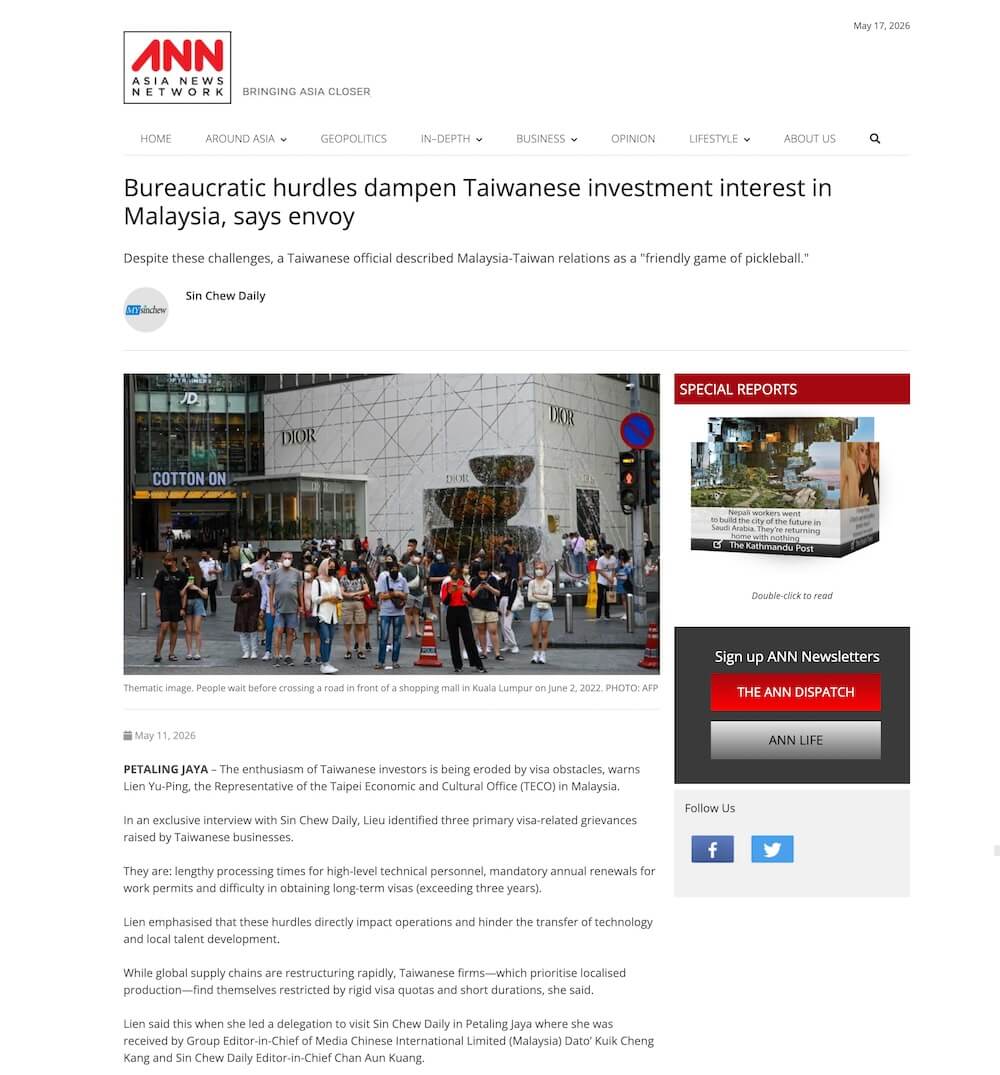
Bureaucratic Hurdles Dampen Taiwanese Investment Interest in Malaysia
TECO Representative Lien Yu-Ping identifies lengthy visa processing, mandatory annual renewals and difficulty obtaining long-term visas as primary investment obstacles. Taiwanese firms prioritising localised production find themselves restricted by rigid visa quotas and short durations.
Editor’s View: Malaysia attracts investment promotion applications but rigid visa bureaucracy prevents conversion into actual capital deployment. Simplifying visa processes would boost investor confidence and support Malaysia’s goals under New Industrial Master Plan 2030 and National Semiconductor Strategy.
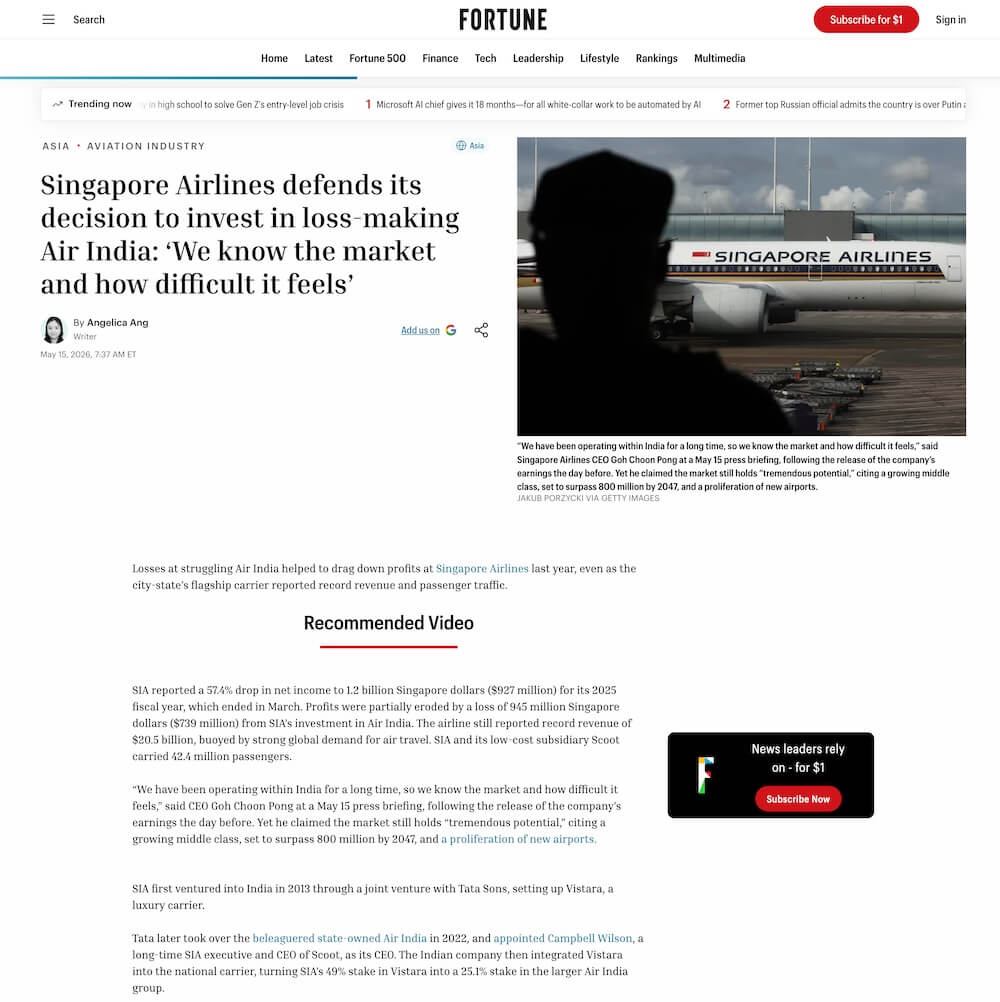
Singapore Airlines Defends Air India Investment Despite $739 Million Losses
SIA reports 57.4% drop in net income to $927 million for FY2025, partially eroded by Air India’s losses. CEO Goh Choon Pong defends investment, citing India’s growing middle class set to surpass 800 million by 2047 and proliferation of new airports.
Editor’s View: Air India reported record $2.8 billion loss in FY2025 after AI171 crash killed 260. Pakistan airspace closure forces longer routes, pushing up fuel costs. SIA’s long-term bet depends on India executing operational turnaround and infrastructure delivery.
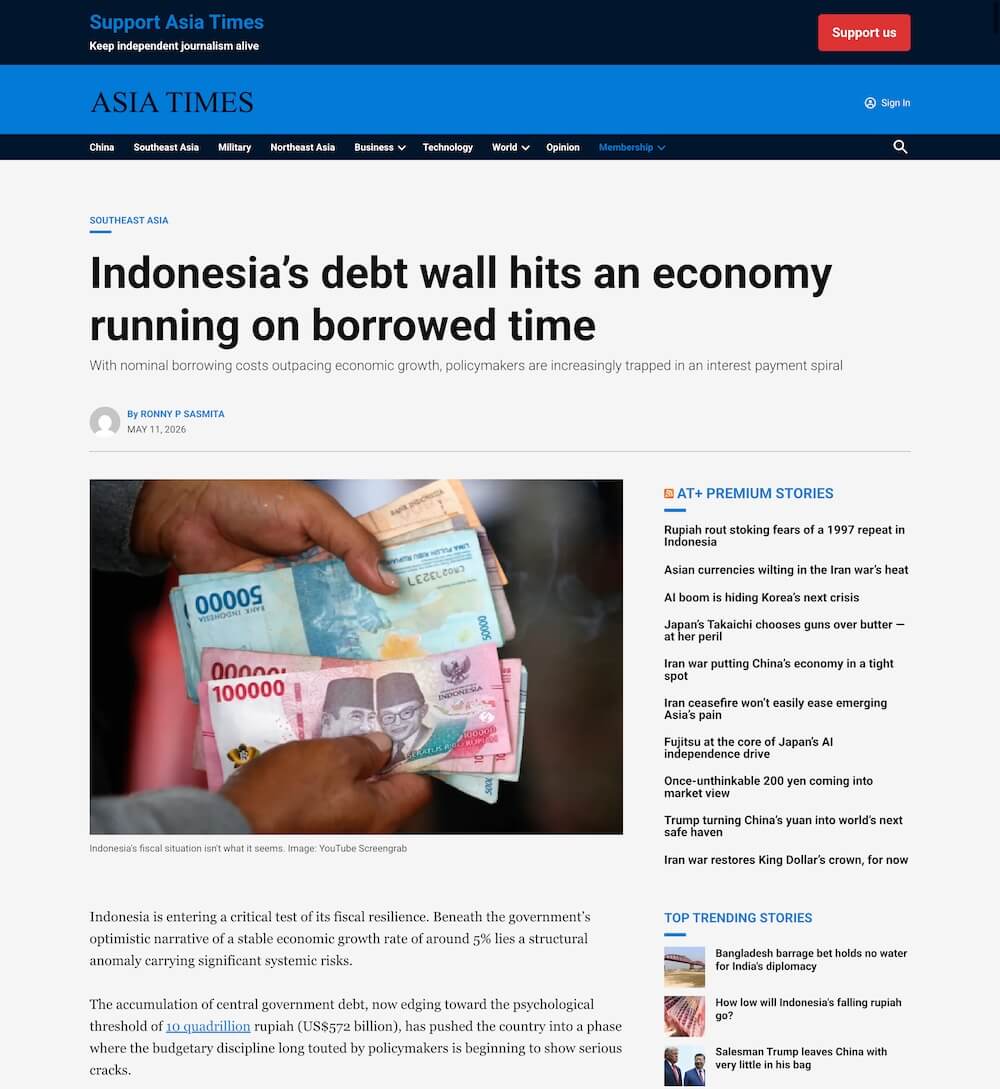
Indonesia’s Debt Wall Hits Economy Running on Borrowed Time
Indonesia confronts 833.96 trillion rupiah ($572 billion) debt maturity in 2026, largest in modern history. Interest payments alone consume 599.44 trillion rupiah, equivalent to 22.27% of total tax revenues, far exceeding IMF’s 10% safety threshold.
Editor’s View: With nominal borrowing costs at 6.6% exceeding 5.1% economic growth, Indonesia is trapped in an unfavourable r > g geometry. Danantara’s 500 trillion rupiah plans risk becoming fiscal time bomb through contingent liabilities unless governed transparently.
Canada Joins Luzon Corridor as Seven New Partners Expand Infrastructure Push
Canada invests $2 million in Luzon Economic Corridor alongside Australia, Denmark, France, Italy, South Korea, Sweden and UK. Corridor connects Subic Bay, Clark, Manila, and Batangas, accounting for 50% of Philippines GDP.
Editor’s View: LEC expansion signals growing international confidence in Philippines as infrastructure investment destination. The inaugural Investor Forum is scheduled for September 2026. Success depends on Manila delivering regulatory reforms and translating commitments into executed projects.
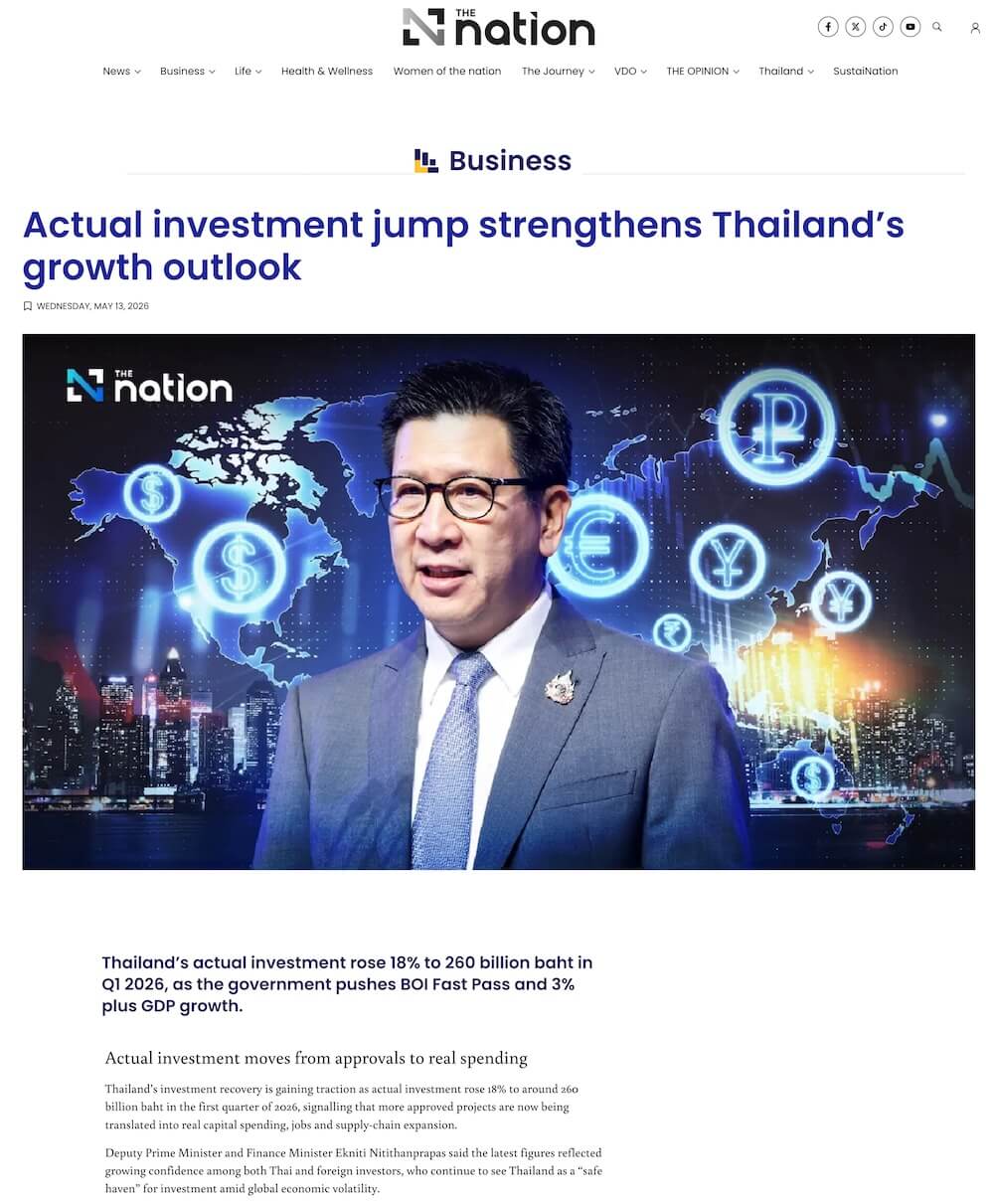
Thailand’s Actual Investment Surges 18% to 260 Billion Baht in Q1
Actual investment rises 18% to 260 billion baht in Q1 2026, signaling approved projects now translating into real capital spending. Government’s BOI Fast Pass mechanism delivering concrete results after previously attracting applications without actual deployment.
Editor’s View: Finance Minister Ekniti Nitithanprapas’ targets actual investment growth of 5%-6% for the full year. Investment promoted through BOI, accounts for 25%-30% of total private investment. Success converting applications into deployment crucial for achieving “3% plus” growth target.