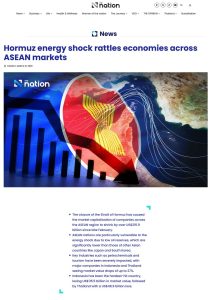
ASEAN Markets Lose USD 216.9 Billion as Hormuz Crisis Bites
March 31, 2026
Editor’s View: ASEAN shedding USD 216.9 billion in market capitalisation since late February – a 10.2% drop across 3,500 non-financial companies – exposes structural vulnerability. Indonesia holds 30 days of oil reserves, Philippines 45, Vietnam and Malaysia 50, Thailand 103. Japan and South Korea hold over 200 days. Petrochemicals took the hardest hit: Indonesia’s Chandra Asri plunged 27%, Thailand’s PTT fell 12%, Siam Cement dropped 18%. Vietnam Airlines lost 21% and is cutting domestic flights from April. Thailand estimates a 25% drop in foreign tourist arrivals if the crisis drags on. Low reserves mean immediate exposure – no buffer, no time.
Full article here: Hormuz energy shock rattles economies across ASEAN markets
Philippines Transport Workers Strike as Fuel Costs Spiral
March 28, 2026
Editor’s View: Thousands of jeepney, bus, taxi and motorcycle taxi drivers staging a two-day strike in Manila reflects grassroots frustration over fuel prices and government inaction. Diesel hit USD 2.30 per litre, petrol nearly USD 2 – among the highest in Southeast Asia despite lower incomes than Singapore. President Marcos declared a national energy emergency on 25 March, promising fuel procurement and anti-hoarding measures, plus a 5,000 peso (USD 83) subsidy to 300,000 transport workers. But 2 million work in the sector, many report missing subsidies and workers want price caps, not emergency declarations. Experts blame 98% oil import dependence, deregulation and 12% VAT. Workers didn’t start this war, but they’re paying for it.
Full article here: Philippine transport strikers say Marcos Jr failing to control oil prices

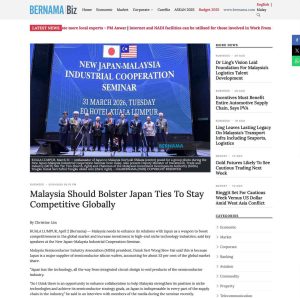
Malaysia Urged to Deepen Japan Ties to Stay Competitive
April 02, 2026
Editor’s View: Malaysia Semiconductor Industry Association president Wong Siew Hai calling for deeper Japan collaboration is grounded in hard data: Japan controls 53% of global semiconductor silicon wafer supply and dominates the entire value chain from IC design to end products. Wong’s pitch is strategic – diversify from US-China dependency, attract wafer fab investments and leverage Japan’s indispensability in niche technologies. ASEAN Business Advisory Council chairman Nazri Abdul Razak noted 70 years of diplomatic relations provide the foundation. The window is open because geopolitical tensions make Malaysia a shelter from global risks. Seize it or watch it close.
Full article here: Malaysia should bolster Japan ties to stay competitive globally
China and ASEAN Eye Deeper Innovation Cooperation
April 03, 2026
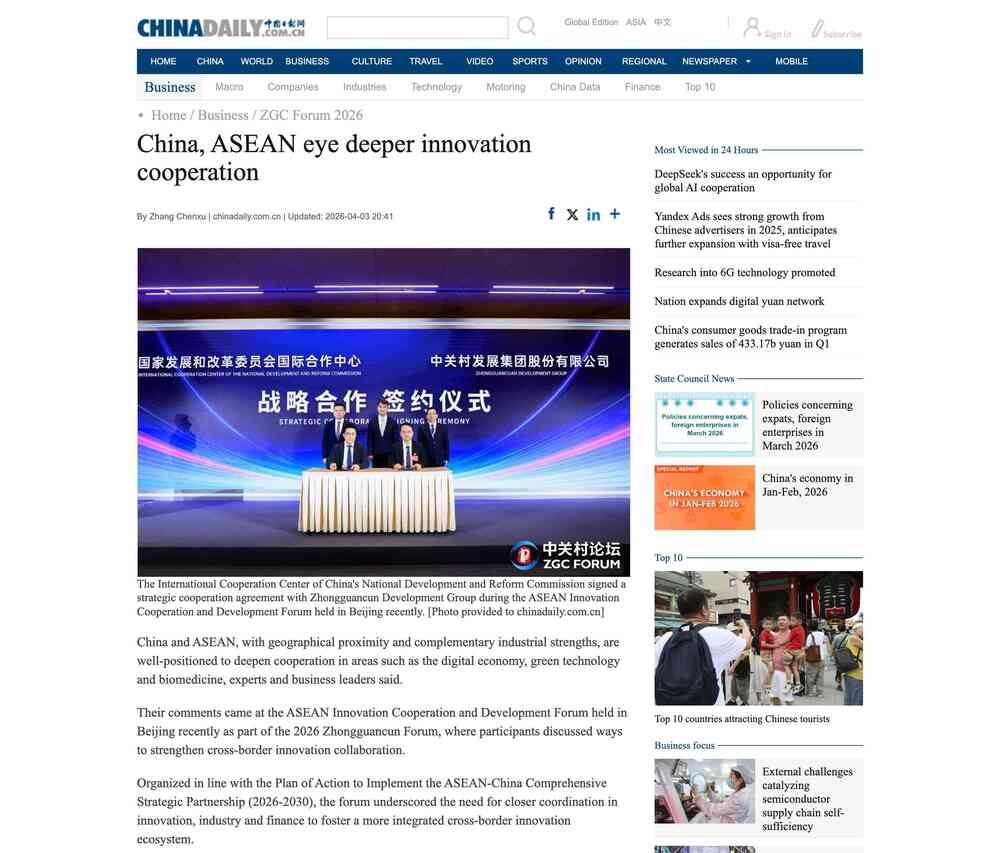
Editor’s View: China’s National Development and Reform Commission signing a strategic cooperation agreement with Zhongguancun Development Group at the ASEAN Innovation Cooperation and Development Forum delivers institutional backing for cross-border collaboration. Focus areas – digital economy, green technology, biomedicine – reflect complementary strengths: China has capital and scale, ASEAN has market access and regulatory diversity. Practical outcomes include the ZGC AI Business International Service Hub (ASEAN) with CGS International Securities as investment banking partner, plus UOB’s “Intellichain: The ASEAN Express” offering one-stop financial services for Zhongguancun enterprises expanding into ASEAN. Now comes execution and delivery.
Full article here: China, ASEAN eye deeper innovation cooperation
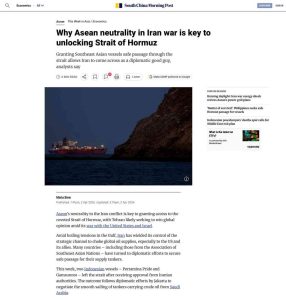
ASEAN Neutrality Unlocks Safe Passage Through Hormuz
April 02, 2026
Editor’s View: Indonesia’s two Pertamina vessels – Pertamina Pride and Gamsunoro – leaving the Strait of Hormuz after diplomatic negotiations with Iran demonstrates how ASEAN neutrality functions as leverage. Tehran grants safe passage to Southeast Asian tankers whilst choking supplies to the US and allies, projecting itself as a diplomatic actor rather than a rogue state. Indonesia’s Foreign Affairs spokesman confirmed communication was established when the situation first escalated. Energy Ministry spokeswoman Dwi Anggia called the vessels and cargo “critical to national energy security.” ASEAN’s refusal to pick sides creates diplomatic space. Neutrality isn’t weakness. It’s strategic positioning that secures energy flows whilst others fight.
Full article here: Why Asean neutrality in Iran war is key to unlocking Strait of Hormuz