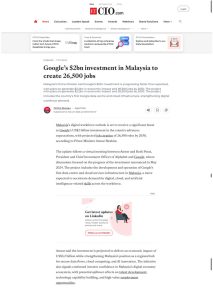
Google Commits $2 Billion to Malaysia, Pledges 26,500 Jobs
February 25th, 2026
Editor’s View: Google pledging $2 billion and 26,500 jobs to Malaysia over five years is a data centre investment dressed up as a skills commitment. The headline figure is impressive but the substance is familiar: cloud infrastructure expansion tied to AI demand, with workforce training as the public-facing narrative. Malaysia already hosts Google Cloud’s regional presence and this deepens it. The jobs figure includes direct hires plus indirect roles across partners and suppliers. What matters is execution: can Malaysia deliver the technical talent pipeline Google needs or will hiring eventually shift to Singapore and India? The investment is real. The jobs commitment is aspirational.
Full article here: Google’s $2bn investment in Malaysia to create 26,500 jobs
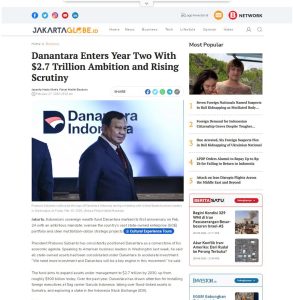
Danantara Enters Year Two with Rp27 Trillion Ambition
February 24th, 2026
Editor’s View: Danantara targeting Rp27 trillion in asset values and Rp3.7 trillion in annual profits is ambitious for a state holding company entering only its second year. The entity was created to consolidate Indonesia’s sprawling state-owned enterprises (SOE) under unified governance, but execution has been messy. Critics point to overlapping mandates with existing ministries, lack of transparency in decision-making and unclear accountability structures. President Prabowo backs Danantara publicly but rising scrutiny from parliament and civil society suggests patience is thinning. The model works in Singapore with Temasek because governance is clear and results are measured. Indonesia needs to demonstrate both if Danantara is to gain credibility.
Full article here: Danantara enters year two with Rp27 trillion ambition and rising scrutiny
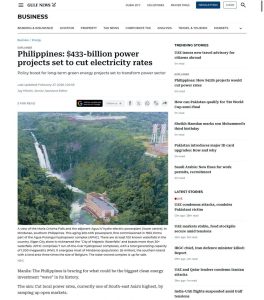
Philippines Unveils $433 Billion Renewable Power Push
February 27th, 2026
Editor’s View: Energy Secretary Sharon Garin announcing a 10-year, PHP 25 trillion ($433 billion) renewable auction roadmap targeting 25GW of new capacity is the biggest clean energy commitment in Philippine history. The Green Energy Auction program uses competitive bidding to lock in transparent pricing and long-term contracts, giving investors the certainty to mobilise capital. PHP 1.3 trillion flowed into renewables in 2025 alone. The pipeline spans offshore wind, battery storage, geothermal, canal-top solar, biomass and hydropower. The reforms backing it – the PPP Law, Right of Way Act and lower RCOA thresholds – are structural, not rhetorical. The challenge is grid infrastructure and last-mile distribution. Frequent brownouts in provincial areas discourage investment. If Manila can solve transmission bottlenecks, this becomes transformational.
Full article here: Philippines: $433-billion power projects set to cut electricity rates
China Overtakes Japan as Thailand’s Top Investor
February 24th, 2026
Editor’s View: China overtaking Japan as Thailand’s largest investor through BOI approvals marks a structural shift, not a temporary anomaly. Chinese investment surged on the back of EV supply chain relocation, data centres and electronics manufacturing. Japan remains a major player but its capital is moving more cautiously as firms reassess regional exposure amid US-China decoupling. Thailand’s BOI approval figures don’t always translate to disbursed investment, so the real test is execution. However, the signal is clear: Chinese firms are committing capital to Thailand at scale and the government is approving it aggressively. Japan’s slower pace reflects risk management. China’s speed reflects strategic urgency. Thailand is positioning itself to benefit from both.
Full article here: Chinese investment overtakes Japan in Thailand

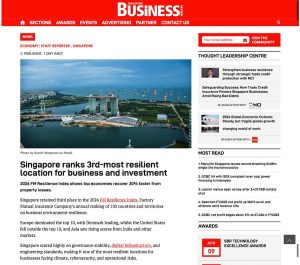
Singapore Ranks Third Globally for Business Resilience
February 26th, 2026
Editor’s View: Singapore rising two spots to rank third in the 2026 FM Resilience Index behind Denmark and Luxembourg confirms what multinationals already know: it’s the most stable business environment in Asia-Pacific. A macro score of 95.9, perfect marks in political risk and urbanisation and a 99.8 cybersecurity score underscore structural advantages competitors cannot easily replicate. FM notes that top-50 locations recover 30% faster from property losses on average. For data centre operators, Singapore, Japan and South Korea offer conditions suited to power-dense infrastructure. Singapore’s edge is governance, transparency and predictability. In a volatile world, that premium matters more than cost.
Full article here: Singapore ranks 3rd most resilient location for business and investment