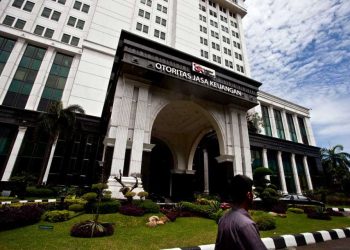
The Jakarta Composite Index fell 7.4% on 28 January 2026, triggering a 30-minute trading halt. Across two sessions it shed more than 10%, erasing USD 120 billion in market capitalisation. IDX President Director Iman Rachman resigned on 30 January. Four OJK officials followed.
The cause was a single MSCI statement published the night before. Indonesia’s shareholding structures were opaque. Its free-float data was unreliable. Trading patterns suggested coordination that distorted prices. MSCI froze all positive index adjustments, suspended the February 2026 rebalancing and set a hard deadline: material progress by May 2026 or Indonesia’s Emerging Market status goes under formal review.
Moody’s and Fitch cut their outlooks on Indonesian sovereign debt to negative in February. Jakarta stocks fell 14% on a monthly basis by late March – the worst since March 2020. Foreign investors pulled USD 1.26 billion in March alone, the largest single-month outflow in over a decade, according to LSEG data cited by Reuters.
Active managers had already trimmed allocations from 1.9% to 1.5% – still above the MSCI EM benchmark weight of 0.9%–1.0%, meaning they hold more Indonesia than the index requires and must sell further if weighting cuts force rebalancing.
That repositioning began before the reform response arrived. In the announcement week alone, net foreign sales reached USD 739 million, according to Bloomberg – markets pricing the outcome before regulators had convened a single meeting. Full outflow scenarios are in the sidebar.
What Eight Weeks of Reform Has Actually Delivered
OJK met MSCI on 2 February 2026 and presented three proposals: investor reclassification from nine to 28 sub-categories within the KSEI central securities depository – Indonesia’s registry of every share and shareholder; monthly disclosure of shareholdings above 1%, down from 5%; and a doubling of the minimum free-float requirement from 7.5% to 15% in stages.
Free float – the proportion of shares genuinely available for public trading – was the figure MSCI concluded was systematically overstated when family conglomerates counted related parties as independent holders.
By 3 April, four of eight reform commitments were complete: 39-category investor classification, a high-concentration registry of nine companies with shareholding above 95%, the 15% free-float rule with a three-year compliance window, and a beneficial ownership policy allowing any investor holding above 10% to be identified on request.
Hasan Fawzi, OJK’s chief capital market supervisor, told reporters on that the disclosure regime was now “in line, if not even more detailed than the conduct of regional and global markets.” OJK and MSCI meet in the third week of April – the assessment that shapes May.
The Consensus: Retained, But Repriced
The reforms bought Indonesia its Emerging Market classification. They did not buy a clean outcome in May.
Ferry Wong, Head of ASEAN and Indonesia Research at Citigroup in Jakarta, wrote in an April 2026 client note that the reforms are “positive and good for the medium- to longer-term outlook,” then added the caveat that counts: “the May 2026 MSCI semi-annual index review may still bring about selective exclusions or weight reductions for stocks flagged with high concentration and effectively lower the free float.”
Henry Wibowo, co-founder of Alphagate Capital in Jakarta and former JPMorgan strategist, confirmed it: “We don’t think Indonesia will be downgraded to frontier market and it will stay in the emerging-market category. That being said, we are expecting a down weight for Indonesia within the MSCI EM bucket.”
Retained classification with a reduced weighting is the consensus. The 0.4 percentage point gap between active funds’ 1.5% allocation and the 0.9–1.0% benchmark weight is the minimum forced selling if MSCI cuts. That is the floor. The question is how many stocks get removed on top of it.
The Risk Hidden Inside the Reform Itself
One specific risk has not entered analyst consensus.
The new 39-category KSEI ownership data may trigger free-float revisions for blue-chip stocks including Bank Central Asia (BBCA), Bank Rakyat Indonesia (BBRI) and Telkom Indonesia. Shareholdings previously counted as freely tradeable could be reclassified as strategic – held by parties connected to the controlling family and therefore not genuinely available to the market.
When that happens, the effective free float falls, the weighting is cut and index-tracking funds must sell. The reform creates transparency. Transparency may force reductions before it enables upgrades.
PT Solusi Tunas Pratama announced in early April it will delist rather than meet the 15% threshold. There are 800 companies listed on the IDX. The nine names on the published registry are the floor of the problem. Managers stress-testing only those names are working from a dataset the reforms have already made obsolete.
The Outflow Range Explained
Analyst estimates span USD 8-13 billion. The range reflects methodology, not uncertainty about the mechanism.
“Markets were pricing the outcome before regulators had convened a single meeting. The operative number for the base case is USD 2-4 billion – the concentrated selling against the nine names on the OJK high-concentration registry.”
Scenario B – Consensus
Scenario C – Tail Risk
Scenario C – Tail Risk
Scenario C – Tail Risk
Scenario C – Extreme Tail
- 39-category investor classification (up from 9)
- High-concentration registry of 9 companies with shareholding above 95%
- 15% free-float rule with 3-year compliance window
- Beneficial ownership disclosure for any holder above 10%
- New KSEI data may trigger free-float revisions for BBCA, BBRI and Telkom.
- PT Soluis Tunas Pratama will delist rather than meet the 15% threshold.
- 9 names on the registry are the floor, not the ceiling of the problem.
- Family conglomerates have 3 years to comply – a deferred problem, not a resolved one.
Three Scenarios and What Each One Demands
The index risk does not arrive alone. Indonesia’s Hormuz-exposed budget is bleeding IDR 6.7 trillion per dollar of oil above USD 70 per barrel and Danantara’s sovereign borrowing base tracks directly against the SOE valuations that index weighting cuts will compress.
The full analysis of those compounding pressures – and what they mean for CFOs and treasurers with Indonesian balance sheet exposure – is in the companion piece: One Budget, One Sovereign Fund, One Oil Price: Indonesia’s Three-Front Battle.
Scenario A – Material Progress Recognised: MSCI lifts the freeze and retains EM weighting. For fund managers, the re-entry case is clear: close the allocation gap to benchmark weight by building positions in large-cap stocks whose free float survives the new data. For executives with Indonesia board exposure, this is the signal that SOE counterparty risk has stabilised. Act only on post-reform data, not the pre-January composition.
Scenario B – Partial Progress, Selective Exclusions: MSCI retains EM classification but cuts weightings and removes stocks the 39-category data now flags. USD 2-4 billion in selling runs across two to three rebalancing cycles. Managers underweight the flagged names absorb little. Those who held them on valuation grounds absorb forced selling with no natural buyer. This is the base case.
Scenario C – No Meaningful Progress: MSCI opens a formal Frontier consultation. Forced outflows of USD 7.8 billion follow – rising to USD 13.4 billion if FTSE Russell matches. Goldman Sachs and Citigroup call this a tail risk. Family-controlled conglomerates with three years to reach 15% free float are a deferred problem, not a resolved one. Deferred problems do not stay in the tail indefinitely.
The MSCI announcement arrives before the formal 12 May 2026 index review.
The Reform Is Real. The Problem Is Not
The family conglomerates have not restructured their ownership. They have not diluted their control. The free-float problem MSCI identified on 27 January 2026 exists in the market today. The rule that will eventually fix it allows three years for compliance.
May delivers a judgment about progress, not completion. Managers who have modelled Indonesia as a binary – downgraded or not downgraded – have missed the question the review actually answers: which names survive the new data, which do not and how much of the selling that follows was already in the price before MSCI published a single word.
References:
- MSCI Results of Consultation on Free Float Assessment of Indonesian Securities
- Indonesia to Raise Minimum Free Float Requirement to 15% – Jakarta Globe
- Measures Taken by Indonesia’s OJK and IDX After MSCI Decision – Tempo
- OJK, BEI, KSEI Accelerate Capital Market Integrity Reforms – OJK Official Statement
- OJK, IDX, KSEI Push for Free Float Adjustments and Data Transparency – Jakarta Globe
- Indonesia Says Stock Market Reform Drive Completed – Jakarta Post
- Indonesian Market Reforms Seen Averting MSCI Cut, Not Weighting Hit – Reuters / The Edge Malaysia
- Indonesia Faces a Perfect Storm of Downgrade Fears – Fortune
- Indonesia Stocks Tumble, Rupiah Nears 17,000 on Budget Deficit Worries – The Star / Reuters
- Indonesian Stocks May See as Much as USD 9 Billion of Outflows on MSCI Threat – CGS International via Asian Asset Management
- MSCI Action in Indonesia Proves Growing Power of Index Providers – ETF Stream
- MSCI Halts Rebalancing, Indonesia Risks Downgrade to Frontier Market – IDN Financials
- Rising Oil Prices from US-Iran War Could Add Hundreds of Trillions to Indonesia’s Budget – Indonesia Business Post
- The Hormuz Crisis and Indonesia’s Fiscal Position – Jakarta Post
Key Data At A Glance
| Indicator | Figure |
|---|---|
| Market Impact | |
| JCI decline, 28-29 Jan 2026 | >10% across two sessions |
| Market cap erased | USD 120 billion |
| Net foreign sales, announcement week | USD 739 million |
| Net foreign outflow, March 2026 | USD 1.26 billion (IDR 21.37 trillion) |
| JCI monthly decline, late March 2026 | 14% – worst since March 2020 |
| Fund Positioning | |
| Active fund allocation to Indonesia | 1.5% vs benchmark 0.9-1.0% |
| Minimum free-float rule, new vs old | 15% vs 7.5% |
| Outflow Scenarios | |
| Base case (Scenario B) | USD 2-4 billion – selective exclusions |
| MSCI reclassification only | USD 7.8 billion (Goldman Sachs) |
| MSCI + FTSE Russell scenario | USD 13.4 billion (Goldman Sachs) |
| CGS International passive estimate | USD 8-9 billion |
| Indo Premier net figure | USD 10-11 billion |
| Fiscal Exposure | |
| 2026 budget oil price assumption | USD 70/barrel |
| Fiscal cost per USD 1 oil above assumption | IDR 10.3 trillion gross; IDR 6.7 trillion net |