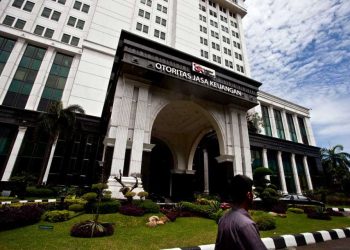
When the Jakarta Composite Index lost more than 10% across two sessions following the MSCI warning on 28 January 2026, Danantara’s anchor assets fell with it. Bank Mandiri and Telkom Indonesia – two of the seven state-owned enterprises at the core of the sovereign fund’s USD 900 billion asset base – are MSCI Indonesia constituents. The selling that erased USD 120 billion in market capitalisation compressed the very valuations that determine how much Danantara can borrow.
Danantara’s CIO Pandu Sjahrir called the MSCI warning a “cold plunge” for markets in a CNBC interview in January 2026. The fund launched in February 2025 with a mandate to consolidate Indonesia’s largest State-Owned Enterprises (SOE) and demonstrate, as President Prabowo Subianto put it, that the state sector could be run to the standard of Singapore’s Temasek. Within eleven months, an index provider had publicly questioned the governance integrity of the assets underpinning its balance sheet.
A Transparency Champion Built on Opaque Foundations
The structural problem is this: Danantara’s borrowing capacity derives from the market valuations of its SOE constituents. When index-tracking funds are forced to reduce those constituents following MSCI weighting cuts, valuations compress and the borrowing base shrinks. The fund created to attract global capital becomes less able to access it at precisely the moment the market needs stabilisation.
MSCI’s specific complaint is that Indonesian listed companies overstate free float – the proportion of shares genuinely available for public trading – by counting related parties and concentrated family holders as independent shareholders. Danantara, the state entity created to solve Indonesia’s transparency problem, is itself among those concentrated holders. The fund was designed to replace the opacity. It is structurally embedded in it.
Global SWF, an independent ratings agency, scored Danantara 4% overall in its inaugural governance assessment – one out of ten on governance, zero on sustainability, zero on resilience. Moody’s revised Indonesia’s sovereign outlook to negative in February 2026, citing concerns that the fund could operate as a “second fiscal pocket” without parliamentary oversight.
Pandu Sjahrir acknowledged the bind in a Fortune interview in April 2026: “The market is asking us to be the anchor of confidence.” A fund whose asset base is being compressed by the crisis it is asked to resolve cannot simultaneously be that crisis’s solution.
The Fund Indonesia Built to Fix Its Markets Is Making Them Harder to Fix
Danantara’s borrowing capacity depends on the same opaque SOE ownership structures that MSCI is demanding Indonesia dismantle. The solution is structurally embedded in the problem.
“The market is asking us to be the anchor of confidence. A fund whose asset base is being compressed by the crisis it is asked to resolve cannot simultaneously be that crisis’s solution.”
– Pandu Sjahrir, Chief Investment Officer, Danantara (Fortune, April 2026)
Free-float problem not resolved by fund creation
Borrowing base tracks index weighting decisions
Moody’s negative outlook – Feb 2026
Overall Score
Governance Rating
Sustainability Score
Resilience Score
- MSCI weighting cut on Bank Mandiri or Telkom reduces Danantara’s asset base – not just those equity positions.
- USD 3.6 B in patriot bonds and USD 1 B credit facility are collateral-linked to those same valuations.
- Institutions with exposure to those instruments face second-order compression beyond the equity trade.
- Deals structured around Danantara’s participation as counterparty or capital anchor carry operational, not just market, exposure.
- The 4% governance score and Moody’s negative outlook are reliability signals for any counterparty assessment.
- A fund absorbing three simultaneous crises – MSCI, oil, fiscal – cannot anchor large transactions with full capacity.
The Counterparty Risk Beyond the Share Price
For fund managers, an MSCI weighting reduction hitting Bank Mandiri or Telkom goes beyond those equity positions. It reduces the asset base of a sovereign fund carrying USD 3.6 billion in outstanding patriot bonds – government-backed securities sold to domestic investors – and a USD 1 billion unsecured syndicated credit facility from international banks.
When collateral shrinks at the sovereign fund level, the implications reach every institution with exposure to those instruments.
For executives with Indonesian infrastructure financing, supply agreements or project arrangements that assume Danantara’s participation as counterparty or capital anchor, the 4% governance score and the Moody’s negative outlook are operational signals, not market abstractions.
They describe the reliability of a counterparty absorbing the MSCI credibility crisis, a Hormuz-driven fiscal squeeze and a compressed SOE asset base simultaneously.
The full context is in the companion pieces: The Night A Single MSCI statement Erased USD 120 Billion and One Budget, One Sovereign Fund, One Oil Price: Indonesia’s Three-Front Battle. The governance paradox at Danantara’s centre is not a secondary risk. It is the thread that connects all three.
References:
- MSCI’s Transparency Questions on Indonesia a ‘Wake-Up Call’: Danantara CIO – CNBC
- Indonesia Faces a Perfect Storm of Downgrade Fears – Fortune
- Indonesia’s USD 80 Billion Wake-Up Call – The Diplomat
- Indonesia Danantara Governance Test Year Two 2026 – Mission Media Asia
- Danantara and the Return of the Jago Economy – Indonesia at Melbourne
- What We Know About Danantara, Indonesia’s Second Sovereign Wealth Fund – Jakarta Globe
- Indonesia Bets a New Sovereign Wealth Fund Will Finally Unlock Its Potential – Fortune