Thailand’s government is offering enhanced incentives for charging infrastructure. In other words, they know the urban EV story is solved. The rural opportunity is just beginning.
Sure, Bangkok has charging stations on every corner. Metropolitan commuters zip around in BYD sedans and MG hatchbacks. The infrastructure looks adequate, even impressive. But step outside the urban bubble and Thailand’s EV revolution becomes less visible.

This matters more than you’d think. Pickup trucks represented 61% of total car production in Thailand in 2024, making Thailand one of the world’s largest pickup markets. They’re how farmers haul produce, how contractors move equipment, how logistics companies deliver goods across provinces. They’re the backbone of Thailand’s economy.
And right now, electrifying them looks quite the challenge. But that’s exactly why the opportunity is massive.
When Geography Becomes Strategy
Thailand’s charging infrastructure tells a revealing story. Only 11,622 chargers serve a growing EV fleet exceeding 100,000 units and 70% of that infrastructure concentrates in metropolitan areas. Rural regions? Less than 20% of urban charging levels.
For urban passenger cars, this works fine. Bangkok commuters rarely drive beyond charging range. But pickup trucks operate differently. A contractor in Chiang Mai heading to a construction site in Chiang Rai can’t afford range anxiety. A farmer in Nakhon Ratchasima hauling crops to the market needs confidence the vehicle won’t strand them between provinces.
A 2025 Thailand automotive analysis notes: “While passenger cars in urban areas benefit from extensive charging networks and shorter commute distances, pick-up trucks in rural areas face compound challenges of limited infrastructure and demanding usage requirements.”
In other words: Thailand accidentally built an EV ecosystem for only half its vehicle market.
Why Toyota and Isuzu Are Betting Big Anyway
Japanese automakers aren’t known for reckless optimism. Yet Toyota and Isuzu are launching electric pickups in Thailand. Toyota held the world premiere of the new Hilux, which includes a new BEV model, on November 10, 2025, which will launch sequentially from 2026 onward. Isuzu’s electric D-Max follows—production of the right-hand drive model is scheduled to begin at the end of 2025, with sales expected to start in 2026.
What do they see that others don’t?
Start with the policy environment. Thailand’s Board of Investment offers substantial incentives for EV charging station projects, including tax exemptions for operators establishing networks. The government understands that without inter-provincial charging, the 30@30 policy (30% EV production by 2030) becomes urban-only theatre.
More importantly, the infrastructure problem isn’t as insurmountable as it appears. Rural charging doesn’t require urban-style density. Strategic placement along highway corridors solves most use cases. A charging station every 80-100 kilometres on major routes between provinces covers the vast majority of commercial pickup usage patterns.
The Economics Start Making Sense
Here’s where it gets interesting. Financial feasibility for charging infrastructure is improving, with research showing competitive returns for strategically located stations. Energy think tank Ember’s analysis confirms solar and batteries will help Thailand manage “the surge in EV and data centre demand while ensuring affordability, stability and sustainability.”
Thailand’s Provincial Electricity Authority is piloting exactly this model. Charging stations with dedicated solar arrays and battery storage operate semi-independently from the main grid. They’re more expensive to build but far cheaper to operate long-term and they don’t stress aging rural grid infrastructure.
Commercial operators are taking notice. Fleet total cost of ownership analysis increasingly favours electric pickups despite higher purchase prices. Diesel costs matter when you’re running 100-vehicle fleets across provinces. Maintenance expenses matter when downtime costs money. Electric drivetrains deliver savings that compound over vehicle lifetimes.
The ASEAN Blueprint Hidden in Plain Sight
Here’s what makes this really compelling for investors: Thailand isn’t solving a local problem. It’s building the blueprint for Southeast Asia.
Indonesia, Vietnam and the Philippines face identical challenges. Massive rural populations. Pickup-dominated vehicle markets. Limited inter-provincial charging infrastructure. Aging electrical grids. If Thailand cracks rural EV infrastructure economics, the solution scales regionally.
Consider the strategic positioning. Thailand’s EV market surged to 40.2% of total vehicle sales in Q1 2025, making the government’s target of 30% EV production by 2030 increasingly realistic. Companies that solve rural charging and commercial EV logistics in Thailand will gain first-mover advantage across ASEAN markets representing approximately 680 million people.
That’s not speculation. It’s already happening. Thai charging operators are signing knowledge-sharing agreements with their Indonesian and Vietnamese counterparts. Japanese automakers are using Thailand as the testing ground for electric pickups they’ll eventually roll out across ASEAN. Battery-swapping technology validated in Thailand gets exported to Manila and Jakarta.
What 2026 Could Look Like
The next 18 months will determine whether Thailand’s EV transition remains urban-only or goes genuinely national. Electric pickup production ramps up commercially in 2026, moving from concept to serious volume manufacturing.
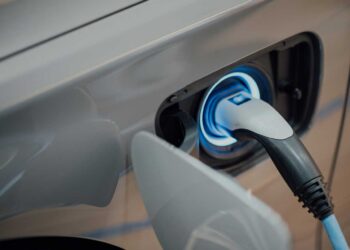
Meanwhile, Thailand’s charging infrastructure is expanding beyond urban centres, with PTT investing in solar-integrated charging stations along highways outside Bangkok, targeting exactly the routes where pickup trucks operate.
Battery-swapping infrastructure for commercial vehicles is moving from trials to commercial deployment. The technology works. The economics work for high-utilisation fleet vehicles. Now it’s about scaling.
Private equity is paying attention. Charging infrastructure funds specifically targeting highway corridor installations are raising capital. The returns look compelling precisely because urban markets are oversupplied while rural markets are underserved.
The Diesel Subsidy That Might End
Thailand’s diesel fuel subsidies have cost the Oil Fuel Fund tens of billions of baht. Nobody talks about it much, but those subsidies are why diesel pickups remain so economical.
Remove them, and electric pickups suddenly look far more competitive on total cost of ownership.
Thailand’s Finance Ministry has been reviewing fuel subsidy policies since 2024, pressured by budget constraints and climate commitments.
If diesel subsidies phase down through 2026-2027, the electric pickup business case strengthens dramatically, without requiring additional EV incentives.
The timing would align perfectly with Toyota and Isuzu’s electric pickup production ramp-up. Coincidence? Maybe. Strategic policy coordination? Possibly.
Keep watching the budget announcements →
The Opportunity Hiding in the Gap
Thailand’s urban-rural infrastructure divide isn’t a failure. It’s the next growth phase. Urban EV adoption is largely solved; rural adoption is where the actual volume lives.
Smart investors aren’t avoiding rural complexity. They’re positioning for the companies solving it. Charging operators with highway corridor strategies. Battery-swapping platforms for commercial fleets. Solar-plus-storage integrators reducing infrastructure operating costs. Grid modernisation technology enabling rural charging without massive transmission upgrades.
The companies cracking rural EV infrastructure won’t just serve Thailand. They’ll own the blueprint for Indonesia’s 280 million people, Vietnam’s booming manufacturing economy and the Philippines’ sprawling archipelago logistics challenges.
Thailand’s pickup trucks drive the economy today. By 2030, a meaningful portion of them could be electric, not because policy mandates it, but because the infrastructure and economics finally make sense.
The gap between urban and rural EV infrastructure looks like a problem. For the investors paying attention, it’s a multi-billion-dollar opportunity hiding in plain sight.