The Philippines is racing towards trillion-dollar economy status by 2033, with officials touting the Build Better More infrastructure agenda allocating roughly $26 billion to infrastructure in 2025 and accelerating FDI inflows. But there’s a problem most growth forecasts aren’t accounting for: the water isn’t there to support it.
Whilst government presentations feature impressive infrastructure pipelines and rising investment commitments, 11 million Filipino families lack clean water access – almost half the nation’s households. More critically, 40% to 80% of the country’s water supply could be depleted by 2040 due to climate impacts.
That’s not a social welfare problem. It’s an industrial bottleneck hiding in plain sight.
The Constraint Investors Aren’t Pricing
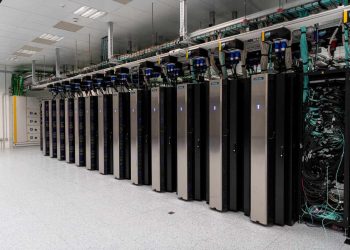
The Philippines’ data centre market is projected to surge from USD 633 million in 2024 to USD 1.97 billion by 2030 – a 20.9% compound annual growth rate. But consider what that actually requires: a typical chip manufacturing facility consumes 10 million gallons of ultrapure water daily, equivalent to 33,000 US households.
The Philippines operates in a climate where average temperatures exceed 27°C – well above the 18°-27°C optimal range for efficient data centre operations. That means more cooling, which means exponentially more water. With 12 upcoming data centres scheduled for construction, water demand multiplies faster than the current supply infrastructure can accommodate.
Semiconductor manufacturing tells an even starker story. Producing 1,000 gallons of ultrapure water requires 1,400 to 1,600 gallons of municipal water. Electronics manufacturing already represents a significant GDP contribution, yet industrial water infrastructure hasn’t scaled proportionally.
The Business Process Outsourcing (BPO) sector – contributing over USD 30 billion annually and employing 1.5 million people – concentrates heavily in Metro Manila and Cebu, precisely where water scarcity is most acute. BPO facilities may not consume water at semiconductor fab levels, but workforce support and operational continuity depend on reliable municipal supplies.
Infrastructure Delays That Actually Matter
The Kaliwa Dam illustrates how infrastructure timelines diverge from economic planning. Originally scheduled for 2023 completion, the 73-metre dam stands only 24.8% complete as of December 2024 – five years after construction began. Project costs escalated from PHP 12.25 billion ($207 million) to PHP 15.3 billion ($259 million), with commissioning now expected around Q2 2028.
Delays stem from permit bottlenecks, indigenous peoples’ opposition and geological challenges; exactly the sort of friction that compounds over years. The dam is designed to deliver 600 million litres daily, but that capacity arrives years after industrial expansion demanded it.
The Upper Wawa Dam, which began operations in December 2025, will provide 700 million litres per day – substantial but insufficient when accounting for population growth, industrial expansion and climate volatility.
Desalination offers an alternative. The Metro Iloilo facility – currently under construction– will become the Philippines’ largest desalination plant, delivering 66.5 million litres daily by 2027. That’s meaningful capacity for Iloilo. Metro Manila and industrial corridors across Luzon still lack comparable projects at scale.
Hedging for the Wrong Bottleneck
Investors and policymakers fixate on electricity constraints. The Philippines’ electricity costs rank among the highest regionally, prompting government mandates for 35% renewable energy by 2030 and 50% by 2040.
That’s rational. But water risk receives far less scrutiny despite being equally foundational. A data centre without adequate power can shift to backup generators or stagger operations. A semiconductor fab without ultrapure water supply simply halts production. There’s no temporary workaround.
Semiconductor manufacturers globally acknowledge this vulnerability. TSMC’s Phoenix facility commits to reclaiming 65% of water used, precisely because Arizona faces Colorado River water shortages. Singapore invested heavily in desalination and NEWater recycling to support its semiconductor industry.
The Philippines hasn’t implemented equivalent systems at required scale. Industrial parks in Laguna, Cavite and Batangas – anchors of electronics expansion – depend on ageing municipal water systems originally designed for far smaller industrial loads.
The PPP Code’s Transparency Dividend
Transparency frameworks don’t just attract capital, they reduce its cost. When PPP Center publishes every contract, timeline, and performance metric online, investors price less governance risk into financing terms.
Institutional credibility compounds. Every transparently executed project lowers financing costs for the next one.
The FDI Sentiment Risk That Needs Serious Quantifying
Foreign direct investment inflows reached USD 8.9 billion in 2024, supporting the Philippines’ projected 5.1% growth in 2025. But water constraints introduce operational risk that FDI site selection models are beginning to incorporate.
The competitive dynamic matters. Vietnam, Thailand and Indonesia also compete for electronics manufacturing and data centre investments. If the Philippines’ industrial corridors face documented water constraints whilst competitors demonstrate adequate supply, capital flows adjust accordingly.
Land values in industrial estates will reflect this calculus, though often with a lag. Industrial lots in water-stressed zones will command lower premiums than those with secured long-term supply – a pricing signal that hasn’t yet fully materialised but will as constraints tighten.
What 2027-2030 Actually Requires
Closing the gap demands concurrent shifts.
First, accelerating water infrastructure completion through streamlined permitting. Right-of-way issues and indigenous peoples’ concerns extend timelines beyond financial models. Without dedicated expediting mechanisms, the funding gap persists even as PPP frameworks theoretically enable private participation.
Second, establishing industrial water security financing mechanisms – whether through sovereign wealth vehicles or targeted ODA packages. Water infrastructure requires long-term revenue certainty through municipal tariffs or industrial off-take agreements. But tariff adjustments face political resistance. Reconciling investor returns with affordable rates creates implementation friction that delays projects.
Third, mandating water recycling for high-consumption industrial facilities. Semiconductor fabs globally achieve 85-92% water reuse through closed-loop systems. Philippines regulations don’t currently require comparable standards for new industrial developments.
The Question We Should Be Asking
Can the Philippines realistically achieve trillion-dollar economy status by 2033 without solving industrial water security by 2027?
The maths suggests otherwise. Data centres, semiconductors and electronics manufacturing – three pillars of growth projections – are water-intensive operations. If infrastructure lags behind industrial expansion, capacity constraints emerge not from power grids but from water supply.
The Philippines’ 2023 ambitions rest on attracting precisely the industries most vulnerable to water scarcity. That’s not speculation; it’s industrial reality that site selection consultants already incorporate into recommendations.
The opportunity window remains open but narrowing. Institutional investors are allocating capital towards Southeast Asian growth. Whether the Philippines captures proportional share depends on demonstrating that industrial corridors can support high-water-consumption operations at scale.
Water infrastructure isn’t glamorous. It doesn’t generate headlines like electric vehicle policies or semiconductor subsidies. But it’s the constraint that determines whether 2030 growth targets represent achievable projections or aspirational fiction.