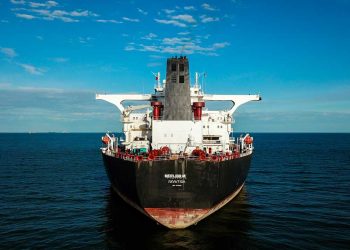
When Brent crude closed above USD 100 per barrel on 12 March 2026 for the first time since August 2022, it arrived on the desk of every CFO in Southeast Asia simultaneously. The closure layered an acute geopolitical shock onto structural capital allocation pressures that were already reshaping where and how corporate money moves across the region.
The pre-shock baseline is well-documented. J.P. Morgan’s CFO View: Asia Pacific Outlook 2026, drawn from around 200 CFOs and treasurers across ten markets, found that 48% named revenue growth as their top priority for the year – ahead of digital transformation, cost optimisation and risk management combined.
Deloitte’s SEA CFO Agenda 2025, covering 190 CFOs across seven Southeast Asian markets, put that figure at 82% within the region specifically, with 46% expecting to increase M&A activity over the following three years. The ambition is consistent across every data set.
The discipline with which capital is being allocated to pursue it is what the headline figures do not show. The Hormuz closure has not reversed that calculus. It has complicated it considerably.
The Cash Imperative Behind the Deal Appetite
The M&A ambition in the survey data sits alongside a financing constraint that is reshaping how deals actually close. Deloitte’s broader APAC CFO Survey found that 49% of Southeast Asian CFOs plan to finance acquisitions entirely in cash – the highest proportion across the APAC markets surveyed and a significant departure from the leverage-driven structures that characterised the pre-2022 era.
The structural logic is not hard to identify. In markets where companies earn in ringgit, rupiah or peso but would traditionally service acquisition debt in US dollars, currency mismatch has become a risk that many boards are no longer willing to carry at the cost of financing.
All-cash deals eliminate that exposure and move faster, a decisive advantage in processes where PE funds, under pressure to return capital to limited partners, are motivated sellers.
The market consequence is visible in the exit data. EY’s Southeast Asia Private Equity Pulse 2025 Year-in-Review, published in February 2026, recorded a 43% year-on-year decline in PE deal value to USD 9.1 billion across 59 transactions. The collapse was concentrated: megadeals above USD 1 billion fell from eight to four.
Mid-market processes, by contrast, saw corporate strategic buyers – writing cheques from cash reserves – gaining competitive positioning that PE funds found increasingly difficult to match.
Luke Pais, EY-Parthenon ASEAN Private Equity Leader, noted that digital infrastructure alone accounted for 42% of PE investments in the region in 2025, reflecting both the AI infrastructure buildout and the shift toward managed-service delivery models that talent constraints are accelerating across the market.
Ho Kok Yong, CFO Program Leader at Deloitte Asia Pacific and Southeast Asia, characterised the broader strategic stance: “SEA CFOs have acclimatised and adapted to the new norm of ongoing economic and geopolitical volatilities – and this has, in turn, translated into a palpable focus on growth.”
The growth focus is genuine. The financing architecture behind it is more conservative than it has been in a decade.
Portfolio Rationalisation as a Supply Signal
The acceleration in portfolio review frequency – 58% of SEA CFOs now conduct formal reviews at least twice yearly, according to Deloitte – is generating an asset supply pipeline that deal advisers are only beginning to map.
This is not passive housekeeping. It reflects a deliberate shift to what Deloitte describes as an “always-on” portfolio mindset: continuous strategic assessment rather than reactive disposal when assets become obvious candidates for sale.
The global context amplifies the SEA dynamic. KPMG’s Global M&A Outlook 2026, based on a survey of 700 M&A decision-makers worldwide, found that 57% of corporate dealmakers and 71% of PE firms are open to or actively pursuing portfolio rationalisation in 2026.
Boards globally are simplifying under geopolitical strain and AI-driven disruption – shedding higher-risk assets and concentrating capital on core operations. SEA CFOs are navigating that same pressure with an additional variable: differential oil price sensitivity across their business units.
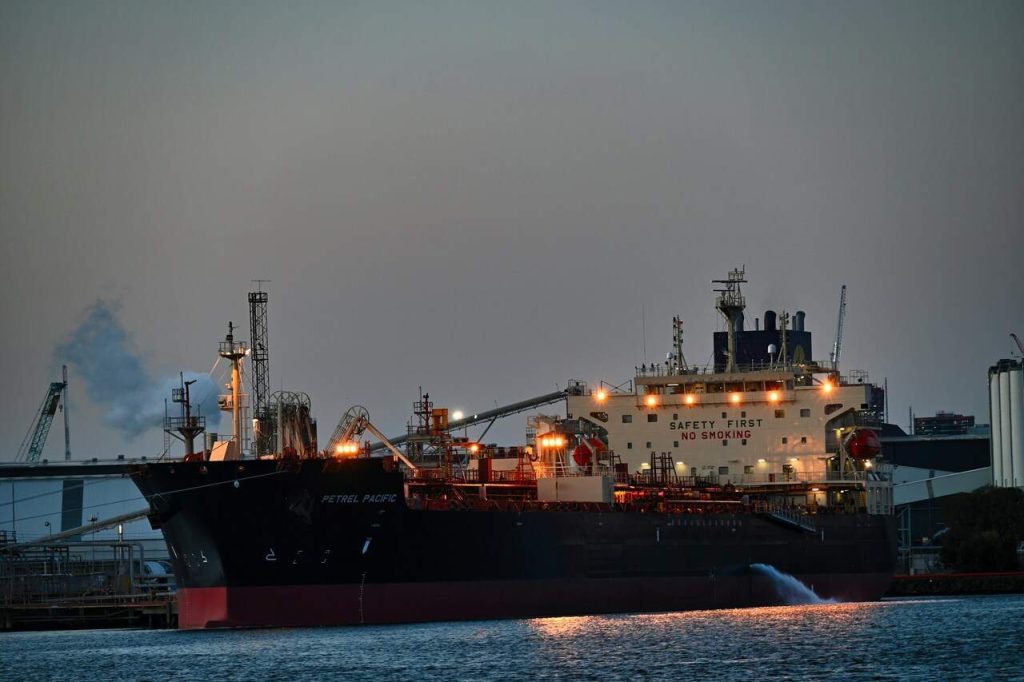
For a CFO managing operations across Thailand – where Nomura estimated net oil imports at 4.7% of GDP, the highest in ASEAN – and Singapore simultaneously, the Hormuz shock has made energy-intensive manufacturing a different asset class than it was in February.
Disposal decisions that were on a twelve-month horizon are moving forward. The carve-out supply this generates is real, and PE is positioning to absorb it: KPMG’s data shows 55% of PE dealmakers are actively considering acquisitions of carved-out assets in 2026.
In a global M&A market that reached USD 4.93 trillion in 2025 – the highest on record and up 37% year-on-year according to PitchBook – demand for quality assets is well-capitalised. The constraint has shifted to supply. Twice-yearly portfolio reviews are generating it.
The AI Constraint That Capital Cannot Solve
The third structural pressure sits in the AI investment pipeline, and its character is unusual: the binding constraint is not capital. Deloitte’s SEA CFO survey identified AI-related technical skills and fluency as the top concern for 78% of CFOs within the finance function – ahead of adoption risk at 55% and culture and trust at 45%.
J.P. Morgan’s CFO View confirms the regional pattern. Despite revenue growth and digital transformation ranking as the two highest priorities for APAC CFOs in 2026, the report identifies talent availability and data infrastructure as the primary execution bottlenecks, not investment appetite. The capital to invest in AI is present. The engineering capability to deploy it internally is not, at the scale required, in most Southeast Asian markets.
The practical consequence is a redirection of AI spending away from internal build programmes toward managed service providers and vendor partnerships – structurally different from how AI capital is being deployed in the US and Europe, where the engineering talent pipeline runs deeper.
For technology companies and managed service providers with regional infrastructure, the CFO’s talent constraint is a direct commercial opening. Digital infrastructure’s 42% share of regional PE deal value in 2025 is partly a reflection of exactly that dynamic.
Where the Pressures Converge
The convergence point is the balance sheet. Bain’s Global M&A Report 2026 identified the corporate share of capital allocated to M&A at a 30-year low globally in 2025, as AI infrastructure, supply chain resilience and R&D competed for the same discretionary pool.
Southeast Asia’s CFOs are navigating precisely that squeeze – with the additional dimension of currency risk, energy cost exposure and a J.P. Morgan survey finding that 44% of APAC CFOs anticipate a tougher economic climate in 2026 than the year before.
The CFOs best positioned to navigate what follows are those who stress-tested portfolio energy sensitivity before oil moved, locked in cash reserves before deal competition intensified, and routed AI delivery through vendor partnerships rather than waiting for an engineering talent base the region does not yet have.
For investors and deal advisers reading corporate strategic intent across Southeast Asia, the signal is in the structure of the decisions, not the growth ambitions behind them.
References:
- The CFO View: Asia Pacific Outlook 2026 — J.P. Morgan Global Corporate Banking
- SEA CFO Agenda 2025 — Deloitte Southeast Asia, February 2025
- APAC CFO 2025 Survey Report — Deloitte Insights
- Southeast Asia Private Equity Pulse 2025: Year in Review — EY, February 2026
- Global M&A Outlook 2026 — KPMG, February 2026
- Asia Pacific Private Equity Barometer 2026 — KPMG, February 2026
- 2025 Annual Global M&A Report — PitchBook, January 2026
- Global M&A Report 2026 — Bain & Company, January 2026
The Carve-Out Cycle
Southeast Asia · Portfolio Rationalisation · 2026
The Hormuz shock has accelerated the cycle. CFOs managing multi-country exposure are now assessing business units by differential oil price sensitivity – not just strategic fit.
Energy-intensive assets in high-exposure markets – Thailand, the Philippines – are being repriced against assets in service-oriented or financially-dominated portfolios.
The carve-out supply this generates is meeting a PE market that is actively positioned to absorb it.
For deal advisers, the pipeline is building now.