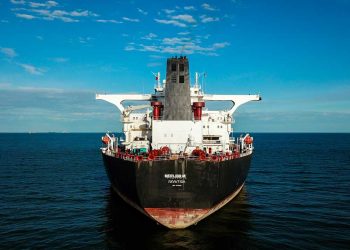
On 12 March 2026, Rayong Olefins – a petrochemicals unit of Siam Cement Group – suspended plant operations after losing access to naphtha and propane routed through the Strait of Hormuz. It was not a financial event. It was an operational one. For deal advisers tracking asset supply across Southeast Asia, it was a signal: the Hormuz shock is doing something a standard portfolio review does not – making the disposal case on behalf of the seller, in real time, inside the income statement.
The Disposal Trigger That Wasn’t in the Q4 Review
Deloitte’s SEA CFO Agenda 2025 found that 58% of Southeast Asian CFOs now conduct formal portfolio reviews at least twice yearly, driven by strategic fit, return on capital and complexity cost. The Hormuz shock has introduced a fourth variable: differential oil price sensitivity across business units and whether that sensitivity is manageable or structural.
Nomura identified Thailand as carrying the highest net oil import exposure in ASEAN at 4.7% of GDP, with every 10% rise in oil prices worsening the current account balance by approximately 0.5 percentage points. In the Philippines, MUFG Bank confirmed 95% of crude imports transit Hormuz, with manufacturing, logistics and food production absorbing the primary indirect impact.
For any CFO managing both energy-intensive operations and asset-light businesses within the same portfolio, the Hormuz shock has completed the strategic differentiation that a scheduled review would have taken months to reach.
How the Hormuz Shock Is Accelerating Southeast Asia’s Asset Disposal Cycle
- Energy-intensive manufacturing — petrochemicals, plastics and industrial chemicals hit by simultaneous input cost spikes and supply disruption.
- Rayong Olefins (SCG) suspended plant operations on 12 March 2026 after losing naphtha and propane access through Hormuz.
- Force majeure declared by Singapore’s Aster Chemicals and Indonesia’s PT Chandra Asri Pacific.
- Logistics assets face asymmetric exposure — freight costs rose unilaterally while customer contracts lack pass-through clauses.
- This is not a distress sale. It is strategic clarity — energy sensitivity is now structural, not cyclical.
- A corporate owner without expertise in managing that exposure is not the natural long-term holder.
- The Hormuz shock is completing the strategic differentiation that a scheduled review would have taken months to reach.
- Sellers framing the disposal with a credible strategic rationale enter a market that is capitalised and ready.
“The Hormuz shock is doing something a standard portfolio review does not — making the disposal case on behalf of the seller, in real time, inside the income statement.”
What Is Moving and Why
Energy-intensive manufacturing – petrochemicals, plastics, industrial chemicals – faces input cost increases and supply chain disruption simultaneously. Force majeure declarations from Singapore’s Aster Chemicals and Indonesia’s PT Chandra Asri Pacific confirm the disruption has moved beyond scenario modelling into current-quarter results. Logistics assets face the same asymmetry: freight costs have risen unilaterally while many customer contracts carry no equivalent pass-through clause.
The disposal rationale for these assets is not distress. It is strategic clarity – a recognition that the energy sensitivity now embedded in their cost structures is structural, and that a corporate owner without expertise in managing that exposure is not the natural long-term holder. That distinction matters enormously for how the deal process is framed and for who is positioned to buy.
Where the Buyers Are Positioned
The supply is meeting a PE market that spent 2025 repositioning for exactly this kind of transaction. EY’s Southeast Asia Private Equity Pulse 2025 recorded USD 4.4 billion in exits across 33 deals, with exit volume up 18% year-on-year as GPs prioritised operational improvement and exit readiness. KPMG’s Global M&A Outlook 2026 found that 55% of PE dealmakers are actively targeting carved-out assets in 2026.
Luke Pais, EY-Parthenon ASEAN Private Equity Leader, characterised the positioning: “PE firms that can bring such value to their current and upcoming portfolio companies will be greatly desired and will prove to be successful in securing both new deals and higher return on exits.”
Sellers who anchor the disposal to pre-shock financials and a credible strategic rationale are entering a market that is capitalised and ready. Those who wait for disruption to stabilise will be valued on a compressed EBITDA base. The window is open. It will not stay that way.
References:
- SEA CFO Agenda 2025 – Deloitte Southeast Asia
- Global M&A Outlook 2026 – KPMG International
- Southeast Asia Private Equity Pulse 2025: Year in Review – EY
- Iran War, Oil Price Shock Negative for Oil-Dependent Asia Countries – Nomura Connects
- Philippines: Strait of Hormuz Closure: Impact of Higher Oil Prices and More – MUFG Research
- Southeast Asia Shuts Offices, Limits Travel as Oil Crisis Deepens – Al Jazeera