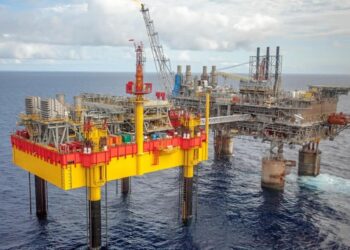
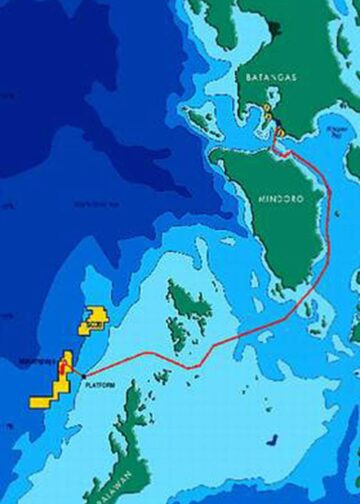
Here’s something that should keep investors up at night: A single pipeline, stretching 504 kilometres from Palawan to Batangas, carries roughly 20% of Luzon’s electricity. By early 2027 –less than two years away – that pipeline will carry nothing but air.
The Malampaya natural gas field is running dry. Not slowly. Not gracefully. It’s depleting at a pace that’s caught even the optimists off guard. When it stops producing, 3,200 megawatts of power generation capacity will need to find fuel elsewhere. The challenge? Transitioning an entire energy infrastructure in less than two years requires careful orchestration: and the Philippines is moving quickly to make it happen.
For institutional investors, property developers and anyone with skin in the Philippine economy, this isn’t just an energy sector problem. It’s a systemic risk that could reshape everything from portfolio valuations to real estate pricing across the nation’s most economically vital island.
The Anatomy of an Energy Crisis
Malampaya has been quietly exceptional since 2001, providing up to 30% of Luzon’s power at its peak, generating $11.9 billion in government revenues, accounting for 98% of the country’s domestic oil and gas production. It’s the kind of asset you don’t fully appreciate until it’s about to vanish.
Department of Energy data from September 2020 – the latest official figure – shows only 858,834 million standard cubic feet of reserves remaining. Enough to last until Q1 2027, they said. But Senator Sherwin Gatchalian warns the reality is more dire. In early 2021, the 1,200-megawatt Ilijan plant was derated to just 716 megawatts due to supply shortfalls, triggering red alerts and rotating blackouts across Luzon.
As Gatchalian observed: “It has started already. It was supposed to happen in 2027… It’s six years earlier. This is very worrisome for all of us.”
Six years earlier than expected. Let that sink in.
The LNG Transition: Building New Foundations
Manila’s response has been to embrace liquefied natural gas with determined focus. In March 2024, three energy giants – Meralco PowerGen, Aboitiz Power and San Miguel Global Power –announced a $3.3 billion deal to build the Philippines’ first large-scale integrated LNG terminal. In March 2025, energy trader Vitol signed a 10-year contract to supply 0.8 million tonnes of LNG annually to Batangas.
But here’s the complexity: importing LNG exposes the Philippines to global spot market volatility. A report by Fitch Solutions warns bluntly: “Unless gas can be produced from domestic sources, the Philippines will need to rely exclusively on imported liquefied natural gas going forward. None of the power producers have secured long-term supply agreements, which may fully expose the country to spot prices.”
For consumers already grappling with some of Asia’s highest electricity rates – averaging $0.22 per kilowatt-hour, nearly double Thailand’s and seven times Malaysia’s – this presents real challenges.
Yet there’s a case for cautious optimism. The $3.3 billion LNG infrastructure investment represents the largest energy sector commitment in Philippine history. First Gen, Meralco PowerGen and Aboitiz Power aren’t just building terminals…they’re creating an entirely new energy ecosystem. And unlike many emerging markets, the Philippines has the institutional capacity and regulatory framework to execute this transition, even if the timeline is tight.
What’s Really at Stake
The dominoes waiting to fall:
Below 20% solar capacity factor
Panels produce electricity less than 1/5 of the time
Investor Implications: Reading the Risk Signals
The Malampaya depletion creates risk in places you might not immediately expect. Power generation companies like First Gen face margin compression as they transition to costlier LNG. A 2024 McKinsey analysis suggests natural gas should complement renewables as a transition fuel through 2030 but adds the critical caveat: economic viability depends heavily on gas price stability, something global markets cannot guarantee.
But there’s a less obvious risk embedded in real estate valuations. The Cavite-Laguna-Batangas industrial corridor has attracted over 400 hectares of new supply targeting semiconductor and EV manufacturers. These aren’t just any tenants. They require stable, affordable electricity to remain competitive globally. The Philippines’ $38 billion business process outsourcing sector – a major driver of commercial real estate demand – is particularly vulnerable to electricity cost pressures.
The commercial real estate sector is already adapting. During the April 2024 power crisis, wholesale electricity spot market prices in Luzon jumped from PHP 5.34 per kWh in March to PHP 6.63 per kWh, a 24% increase in a single month. Terry Ridon, convenor of Infrawatch PH and former Congressman in the House of Representatives, captured the grid’s fragility: “The reason for overloading is not only El Niño-related increase in consumption, but it is also because of unexpected power shutdowns of several power plants connected to the national grid.”
The Renewables Opportunity: Beyond Intermittency
The Department of Energy added a record 794.34 megawatts of renewable capacity in 2024, surpassing the combined total of the previous three years. The OECD’s Clean Energy Finance and Investment Roadmap estimates 178 gigawatts of untapped offshore wind potential along the country’s 17,000 kilometres of coastline.
But here’s the paradox: intermittency. Solar panels produce nothing after sunset. Wind turbines sit idle when the breeze dies. The capacity factor for solar installations in the Philippines is below 20%. Aboitiz Power CEO Emmanuel Rubio captured the dilemma: “When renewable power plants are generating electricity, it’s cheap because there’s no fuel. But when it’s not producing anymore, you need something to put there.”
That “something” is increasingly natural gas – a cleaner transition fuel than coal – which explains why LNG and renewables aren’t competitors but complementary pieces of the Philippines’ energy future. The country is threading a needle: accelerating renewable deployment whilst building the gas infrastructure needed to keep the lights on during the transition. Grid-scale energy storage, whilst still emerging, is attracting significant investment in Southeast Asia. The Philippines could leapfrog into battery storage leadership if it moves decisively over the next five years.
Portfolio Strategy: Navigating the Transition
The Malampaya crisis demands nuance – acknowledging both risks and opportunities. Defensive positioning makes sense for pure-play fossil fuel generation assets lacking clear transition strategies. Opportunistic plays emerge from the billions being poured into LNG infrastructure. PwC’s M&A analysis shows the energy sector led Philippine dealmaking in 2024 with 21 transactions totalling $3.7 billion, driven largely by renewable energy investments and infrastructure modernisation.
Hybrid strategies offer perhaps the most resilience. Aboitiz Power’s $2.2 billion acquisition of multiple power stations in 2024, combining conventional and renewable assets, exemplifies the balanced approach. Real estate hedges become critical. Buildings equipped with solar-plus-storage systems will command premium valuations as grid reliability questions intensify.
Reasons for Measured Optimism
For all the challenges, the Philippines isn’t approaching this crisis blindfolded. The regulatory environment is surprisingly robust. The Department of Energy has demonstrated it can execute large-scale infrastructure projects and the Renewable Energy Act provides clear frameworks for private investment. Unlike many emerging markets, property rights are generally respected, contracts are enforceable and the rule of law functions.
The private sector is stepping up. The energy giants backing the LNG buildout have track records of delivering complex projects. They’re investing billions of their own capital because they see viable business models. Solar panel costs have dropped 90% over the past decade and offshore wind technology is maturing rapidly. The OECD’s estimate of 178 gigawatts of offshore wind potential is based on proven technology that’s already commercial in Taiwan, Japan and Vietnam.
Geopolitical tailwinds are favourable. The Philippines’ deepening security partnership with the United States brings technical assistance, financing options and access to cutting-edge energy technology. Japan and South Korea are offering concessional loans for renewable energy projects.
Dr. Majah-Leah Ravago, associate professor of economics at Ateneo de Manila University and former USAID energy policy programme director, offers perspective: “The COVID-19 pandemic and the anticipated depletion of the Malampaya proffer opportunities to facilitate an efficient transition to cleaner energy.” Making the best of a challenging situation, in other words.
The question isn’t whether the Philippines will navigate this transition…it will. The question is how smoothly, how expensively and which investors will position themselves to benefit rather than suffer through the adjustment.
The Reckoning
The Malampaya depletion is not a problem for tomorrow. The gas restrictions that began in 2021 were the opening act. By 2027, Luzon could face a structural power deficit unless the LNG buildout accelerates beyond current projections and renewable energy deployment overcomes its intermittency challenges.
Institutional investors need to model for higher electricity costs, increased price volatility and potential supply disruptions through the end of this decade. Portfolio managers should stress-test real estate holdings for power reliability scenarios and evaluate energy company investments based on fuel diversification and transition credibility.
The Philippine government’s multi-pronged strategy – LNG infrastructure, renewable acceleration, regulatory reform – represents a credible, if aggressive, roadmap. The numbers are challenging: energy imports rising, generation costs climbing, transition timelines tight. But the fundamentals – political will, private sector commitment, institutional capacity – are in place.
When Malampaya’s last gas molecule flows through that pipeline, it will mark not just the end of an era but the beginning of a fundamentally different energy landscape. The Philippines is transitioning from a single-source dependency to a diversified energy portfolio. It’s messy. It’s expensive. But it’s also an opportunity.
Smart investors aren’t asking whether the Philippines can navigate this transition. They’re asking where the value is being created…and positioning accordingly. The countdown has begun. But so has the buildout.