Asia makes the chips that power AI, smartphones and modern life. Now geopolitics is forcing a trillion-dollar question: spread production globally or keep dominating from home? The choice reshapes everything.
Nobody wants to say it out loud, but when America and China get into a scrap over technology, there are no spectators. You’re either picking sides or pretending you don’t have to choose. And for Asia’s semiconductor powerhouses? That pretence ended about three years ago.Every chip Taiwan manufactures; every wafer South Korea ships; every dollar Malaysia invests in fabrication plants; these aren’t just business decisions anymore. They’ve become geopolitical statements, whether executives admit it or not. The US-China tech war has transformed semiconductors from commodities into weapons, and Asia controls the arsenal.
Think about the stakes for a second. East Asia dominates global chip production. America? A footnote. Yet this dominance has become both a blessing and a trap as Washington and Beijing wage economic warfare with export controls, tariffs and supply chain restrictions that would make Cold War strategists jealous.
The question isn’t whether the industry will transform. It’s who gets crushed in the process.
Taiwan’s Expensive Insurance Policy
At ground zero sits Taiwan Semiconductor Manufacturing Company (TSMC), the crown jewel everyone wants but nobody can relocate. TSMC controls over half the world’s advanced chip output. Your iPhone? TSMC. Nvidia’s AI accelerators? TSMC. The processors powering generative AI? Probably TSMC.
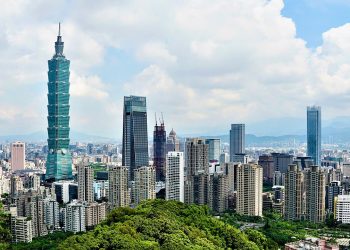
TSMC’s 2024 revenue grew 34% to $88 billion, driven entirely by the AI boom. The company looked untouchable. Except it wasn’t.
Because here’s the uncomfortable reality Washington and Beijing both understand: TSMC’s overwhelming concentration in Taiwan is a vulnerability masquerading as market dominance. One cross-strait incident and the global tech economy will lose access to the processors that run modern civilisation.
TSMC knows this. So does every government with skin in the tech game.
The company’s response? The most expensive geographic diversification in corporate history. For the first time ever, TSMC is producing cutting-edge chips outside Taiwan. Japan’s facility came online late 2024. Arizona started operations early 2025. Dresden, Germany follows in 2027.
But diversification comes with a price tag that would make most CFOs flinch. Building fabs in the US costs four to five times what identical plants cost in Taiwan. Production costs run 30% higher. Materials still ship from Asia. The Arizona facility posted losses of NT$14.3 billion in 2024. TSMC’s 2025 capital expenditure: $32-36 billion, the second highest in company history.
In a nutshell, TSMC is paying billions to duplicate infrastructure it already has, in locations less efficient than Taiwan, because geopolitics now trumps economics. That’s not a business strategy. That’s an insurance policy.
South Korea’s All-In Bet
Whilst Taiwan scrambles to diversify, South Korea is doing the exact opposite. Samsung and SK Hynix are concentrating $471 billion in domestic investment through 2047, building the planet’s largest semiconductor cluster from Pyeongtaek to Yongin.
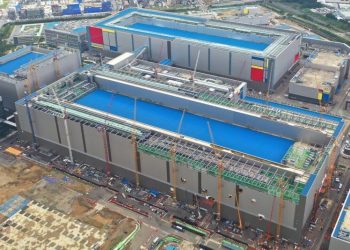
This isn’t expansion. It’s a declaration: South Korea believes memory chips for AI will dominate the next decade, and they’re staking the farm on being the only suppliers who matter.
The timing looks inspired. High-bandwidth memory chips for AI applications command prices five to six times higher than conventional DRAM. SK Hynix’s HBM revenue exploded 300% year-on-year in 2024. The company’s market cap now sits at more than half of Samsung’s for the first time in history. When SK Hynix and Samsung signed deals to supply OpenAI’s data centres, SK Hynix shares jumped 8% to an all-time high.
But here’s the catch: South Korea is betting everything on a single technology cycle. What happens when AI memory demand plateaus? What happens if geopolitics shifts and major customers demand geographic diversification? Samsung and SK Hynix have essentially built the world’s most sophisticated eggs-in-one-basket strategy.
It could be brilliant…or egg on face. There’s not much middle ground.
Malaysia’s Momentum Play
Further south, Malaysia is attempting something more ambitious than anyone expected: leapfrogging from chip assembly to actual design and fabrication. For decades, Malaysia excelled at testing and packaging. The unglamorous stuff. Now it’s aiming higher.
Malaysia’s transformation is particularly striking. The country attracted major investments organically – Intel’s $7 billion in 2021, Infineon’s €5 billion silicon carbide fab, GlobalFoundries’ Penang hub – before the government even launched the National Semiconductor Strategy. When Prime Minister Anwar Ibrahim introduced it in May 2024, he wasn’t creating momentum. He was codifying it.
The strategy commits at least $5.3 billion in fiscal support, aims to train 60,000 engineers and attract investment into chip design and advanced packaging. It’s the rare industrial policy that responds to market reality rather than trying to create it.
Malaysia currently holds 7% of the global semiconductor market and wants to double that to 14% by 2029. Ambitious? Absolutely. Impossible? Maybe not. Malaysia has political stability, English-speaking engineers and strategic geography. It also has something Taiwan lacks: nobody’s threatening to invade it.
Singapore, meanwhile, is pushing harder with its Manufacturing 2030 vision. Already home to fabs, Singapore remains the premium choice for companies wanting an Asian base without Taiwan’s geopolitical baggage or South Korea’s concentration risk.
Want to know the real bottleneck threatening chip production? It’s not capital. It’s not even talent. It’s water.
TSMC consumes 156,000 tonnes of water daily across Taiwan—enough to fill 62 Olympic pools every single day. Making advanced chips requires ultrapure water thousands of times cleaner than what you drink. When TSMC shifted to 16-nanometer chips in 2015, water consumption per unit jumped 35%.
The problem? 40% of semiconductor facilities under construction globally sit in watersheds facing high water stress by 2030. Taiwan’s droughts are getting longer. Arizona—where TSMC just built—is in permanent drought since 1994.
Even TSMC admits its recycling plants will provide only two-thirds of needed water when complete. The other third? Hope it rains.
The Materials War Nobody’s Watching
Here’s where it gets interesting. Whilst everyone obsesses over chip manufacturing, China is quietly weaponising the supply chain from the other end.
December 2024: China restricted exports of gallium and germanium, critical materials for advanced semiconductors. China produces 80% of global silicon and 99% of low-purity gallium. Beijing isn’t just playing defence. It’s reminding everyone that controlling raw materials matters as much as controlling fabrication.
America responded predictably: 140 Chinese firms added to the Entity List in December 2024, export controls blocking advanced chips from reaching China in April 2025 and reciprocal tariffs exceeding 100% between the two superpowers, though semiconductors were exempted from tariffs as of April 2025.
The exemption, though, is temporary. Everyone knows it. Which means every semiconductor executive in Asia is modelling for a world where US-China decoupling becomes absolute. Separate supply chains. Separate standards. Separate markets.
Building for both? Impossibly expensive. Choosing one? Potentially catastrophic if you guess wrong.
What Happens Next
Taiwan must continue its painful, expensive geographic diversification whilst maintaining technological leadership. Every dollar spent building Arizona fabs is a dollar not spent on R&D. Every engineer relocated to Germany is one fewer in Hsinchu. But the alternative – remaining concentrated in Taiwan – is betting your entire business on cross-strait stability. Good luck getting insurance for that.
South Korea’s memory bet looks smart today. AI data centres are consuming HBM chips as fast as SK Hynix and Samsung can produce them. But technology cycles turn. Memory gluts happen. When (not if) the next downturn hits, South Korea’s $471 billion concentration play will be stress-tested in ways that make executives nervous.
Malaysia and Singapore have the luxury of being strategic hedges. Not dominant enough to threaten anyone. Not insignificant enough to ignore. As US-China tensions escalate, being the neutral manufacturing hub might prove more valuable than being the technological leader. Sometimes second place survives longest.
The Real Question
The semiconductor industry has weathered boom-bust cycles for decades. This isn’t that. This is a structural reorganisation driven by great power competition, with trillion-dollar implications and zero room for miscalculation.
Asia’s semiconductor leaders are making massive bets. TSMC: geographic insurance at astronomical cost. South Korea: all-in on AI memory. Malaysia: the ambitious leapfrog. Each strategy has merit. Each carries existential risk.
The question isn’t whether Asia will continue dominating semiconductor manufacturing. It will. The question is which companies and countries will still matter when the US-China cold war reaches its next phase.
One thing is certain: the era of pure economic optimisation is over. Politics now dictates where chips get made, who gets access and what technologies transfer across borders. Asia’s semiconductor giants can adapt to that reality or be overwhelmed by it.
Right now, they’re adapting…expensively…frantically. Because when America and China wage economic warfare, there are no bystanders. Only survivors.