
With no political experience she was the largely unnoticed, behind-the-scenes supporter of her husband, a charismatic Filipino civil leader – until circumstances thrust her into the limelight as the leader of a revolution.
By all accounts, Corazon (Cory) Aquino was not your typical political maverick who unites nations and agitates for change, preferring instead to live the domestic life of a devout Catholic, a wife and mother to a young family.
Trained in mathematics, with a qualified legal mind, Cory Aquino, was hardly molded for the role as leader of the People’s Power revolution in 1986 and later as President of the Philippines.
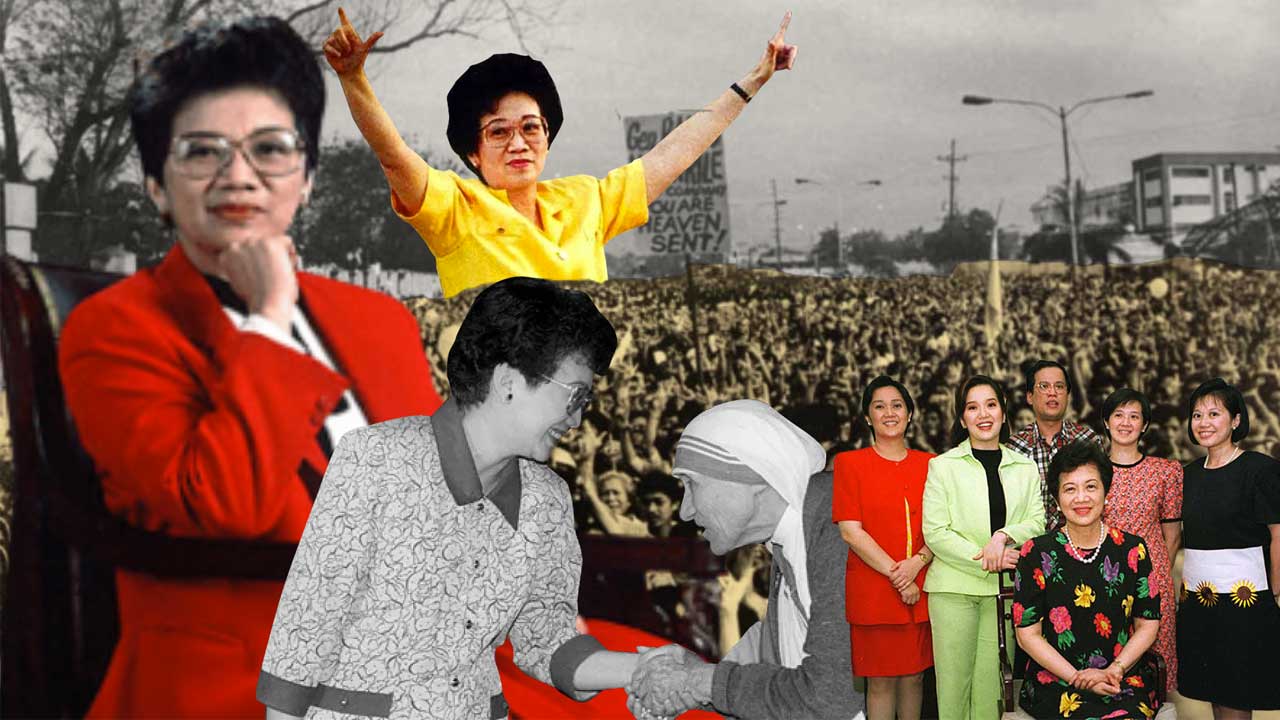
Leaving a stable, happy life in Boston, Cory Aquino returned to Manila in 1983 to bury her husband, Benigno (Ninoy) Aquino after he was assassinated on his return from exile, and thus inadvertently mobilised a nation to challenge the draconian and failing regime of President Ferdinand Marcos.
Rebuilding her life and that of her young family in the Philippines, Cory Aquino experienced first-hand the abject poverty, corruption and utter disregard for human rights under the dictator Ferdinand Marcos. It was clear that any movement for change would need a charismatic and zealous leader.
The Failing Marcos Regime
Under the draconian, Marcos regime, the constitution had been replaced by martial law with freedom, human rights and civil liberty ditched.
With the economy floundering, infrastructure crumbling, the nation was crying out for change and Benigno (Ninoy) Aquino was the smart, charismatic capable leader, who captured hearts and minds.
Recognising a threat, Marcos – who had systematically dismantled the ramparts of democracy and subdued the military and the judiciary to his will – ensured that the young Senator from an influential, Filipino family was marginalised and exiled in the U.S.
His wife an intelligent, educated woman, also from a well-connected Filipino family was uninterested in the limelight; preferring to be on the sidelines supporting her husband’s political rise while raising their children.
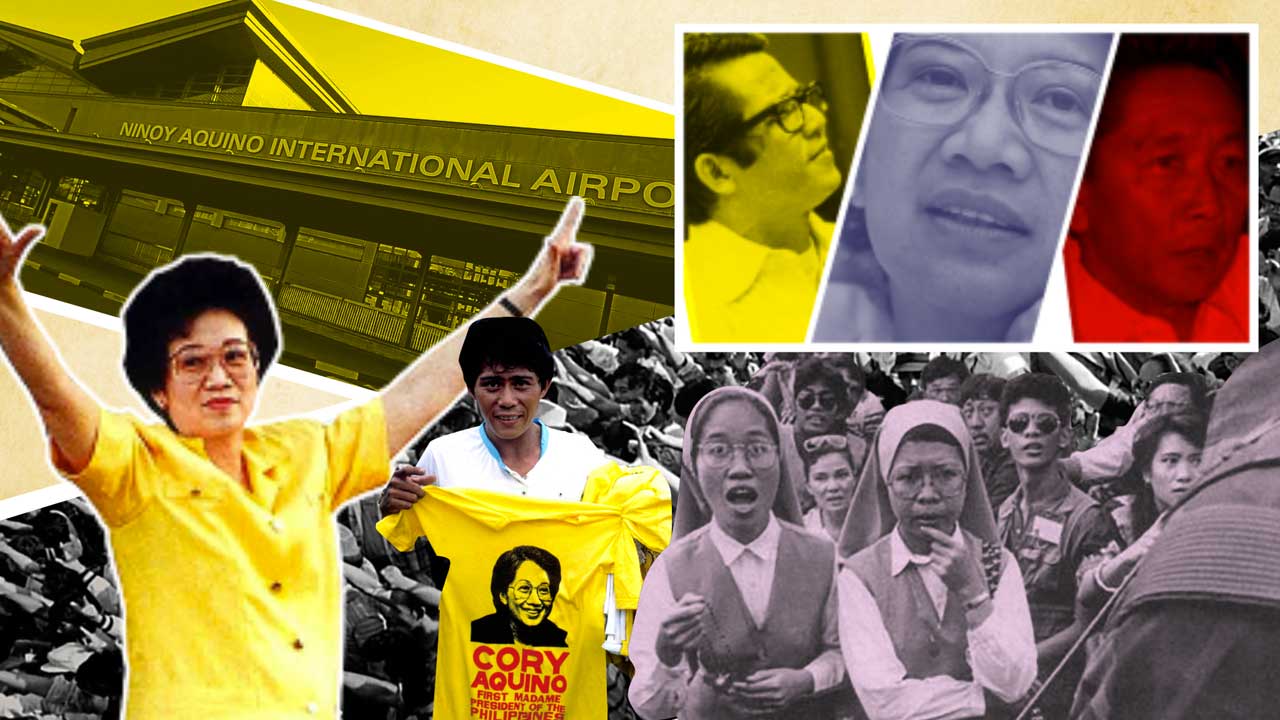
As public discontent grew stronger and more fervent, so did Cory Aquino’s political bearing, confidence and mission to lead.
Initially uncomfortable in her role as the leader of the opposition, the Yellow Revolution – a series of demonstrations in Epifanio de los Santos (EDSA) in February of 1986 – turned into a national mandate for change with more than two million protesting Filipinos.
When the military generals led by Fidel Ramos and the Archbishops of Manila and Cebu – Cardinals Sin and Vidal – plus the U.S. all voiced their support for change, Marcos capitulated and fled to Hawaii, leaving the young untested widow to be sworn in as the eleventh president of the Philippines.
A Fragile Nation and Restoring International Confidence
Far removed from the country we recognise today, apart from its long-standing engagement with the US as a location for American armed forces in the Pacific, the Philippines did not really hold any position on a global stage.
A fundamentally agrarian economy, the tropical archipelago of over 7,500 islands had limited industry, failing national infrastructure, unskilled population, widespread penury and a burgeoning national debt with very little else to offer.
Ravaged by President Marcos and his network of landowning cronies, the country was destined to be a failed state. Aquino’s task ahead was not only to galvanise the disenfranchised and disheartened population, but also build international confidence in the country and somehow attract urgently needed foreign direct investment.
In short, the country she now helmed was a mess; the international community had very little confidence in the long term viability of the Philippines and Cory Aquino had to find a way forward.
Setting Things Right
Her first acts were to rewrite the constitution, reinstate press freedom and civil rights to the population, restore the bicameral parliamentary system and institute the separation of executive power over the judiciary.
Alongside the restoration of democratic rule, she restored confidence and underlying all of this, was her reputation and image as a morally upright woman of integrity.
Aquino built several safeguards into the new Constitution including a single six-year presidential term limit to avoid prolonged rule and restrictions on the President’s power to declare Martial Law, requiring Congressional review and Supreme Court oversight.
Under the rules of the new constitution she defined, Cory Aquino served a single six-year term in office – an extremely short tenure – and yet during that time she achieved more than many other leaders in several decades of leadership.
Taking the Philippines to the World
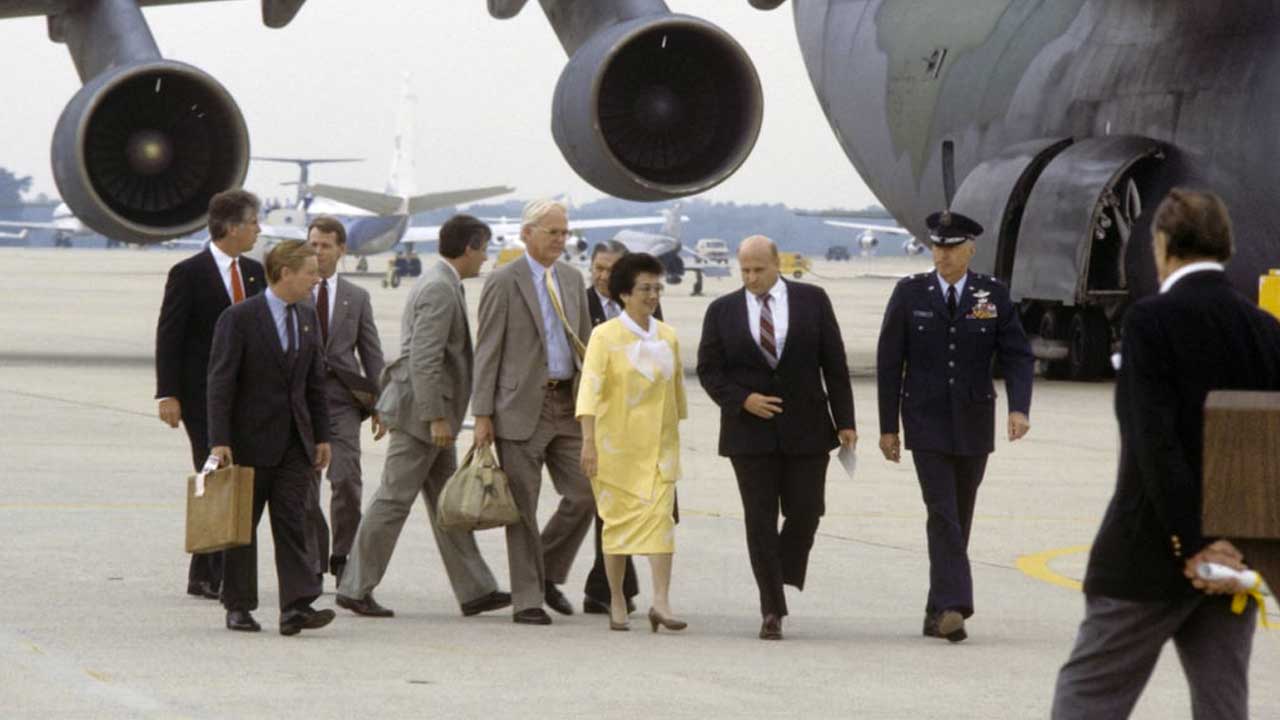
Critical to long term success for the Filipino people meant attracting much needed foreign investment. In 1986, a trip to the U.S. managed to secure some US$200 million in investments and likewise she played an excellent trade ambassadorial role to Japan, Europe and closer to home forged strong partnerships with regional neighbours in ASEAN.
Not a natural orator, her speeches at the U.S, Congress, United Nations General Assembly and other international forums exemplified the fortitude and courage of a mother looking to protect her young and newly recovering family of a nation.
Indicative of the confidence Cory Aquino gradually restored in the Philippines, in 1992, Accenture set up the first Business Process Outsourcing company in Manila setting the country on track to be crowned the world’s BPO capital by 2010 with the sector delivering a whopping US$37.8 billion in 2024.
Giving the Filipinos a purpose and position on the global stage, Cory Aquino is widely recognised as the leader who invested in the future of her people, encouraging the nation to upskill, become more aware of their human and political rights and ultimately, learn to fight for their collective future.
A Mother’s Touch
Her six years as President of the Philippines did not fix everything. Some critics argue that her economic policies were too conservative and failed to alleviate poverty or address social inequality, but she will always be applauded as a woman who brought focus and vision to restoring a democracy. The smooth handover of power to her successor, being proof of both vision, structure and personal promise.
She embodied the empathy and adroit skills that any mother brings to business environments. She showed the Philippines and indeed the world that change can be effected through meaningful and positive rhetoric. She embodied many of the qualities of the International Women’s Day movement and this year’s theme of Accelerating Action.